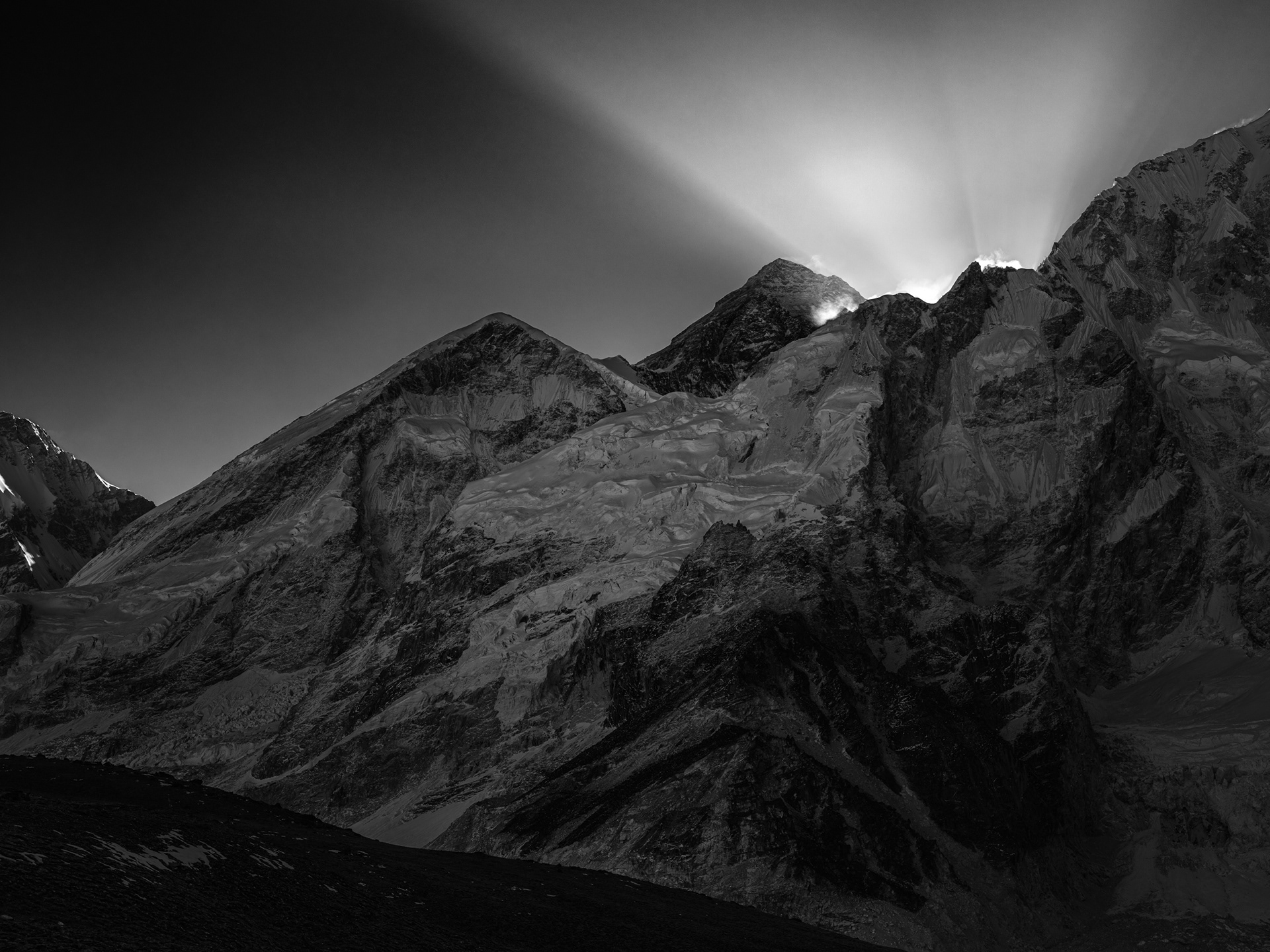
Everest Sunrise
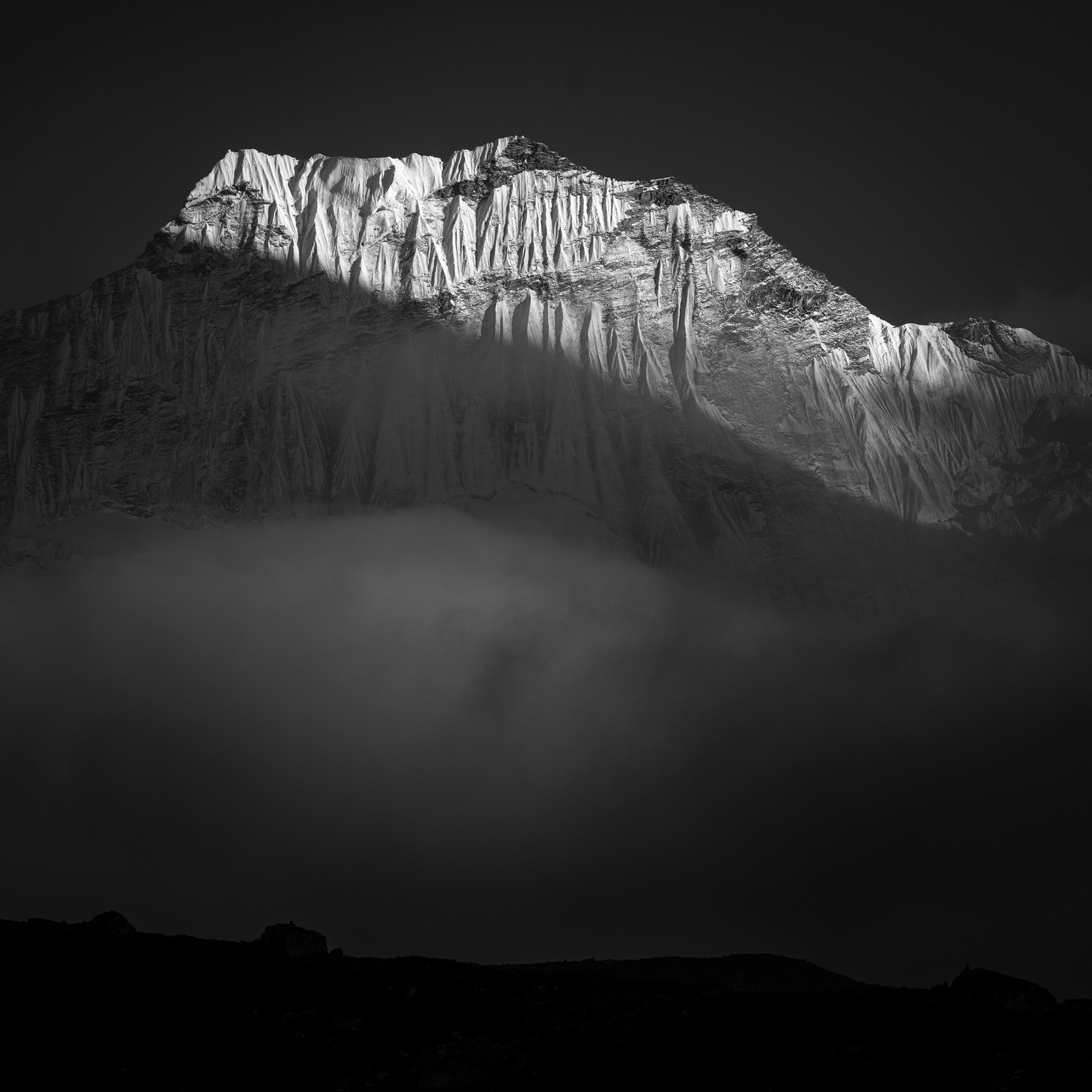
Light creates miracles
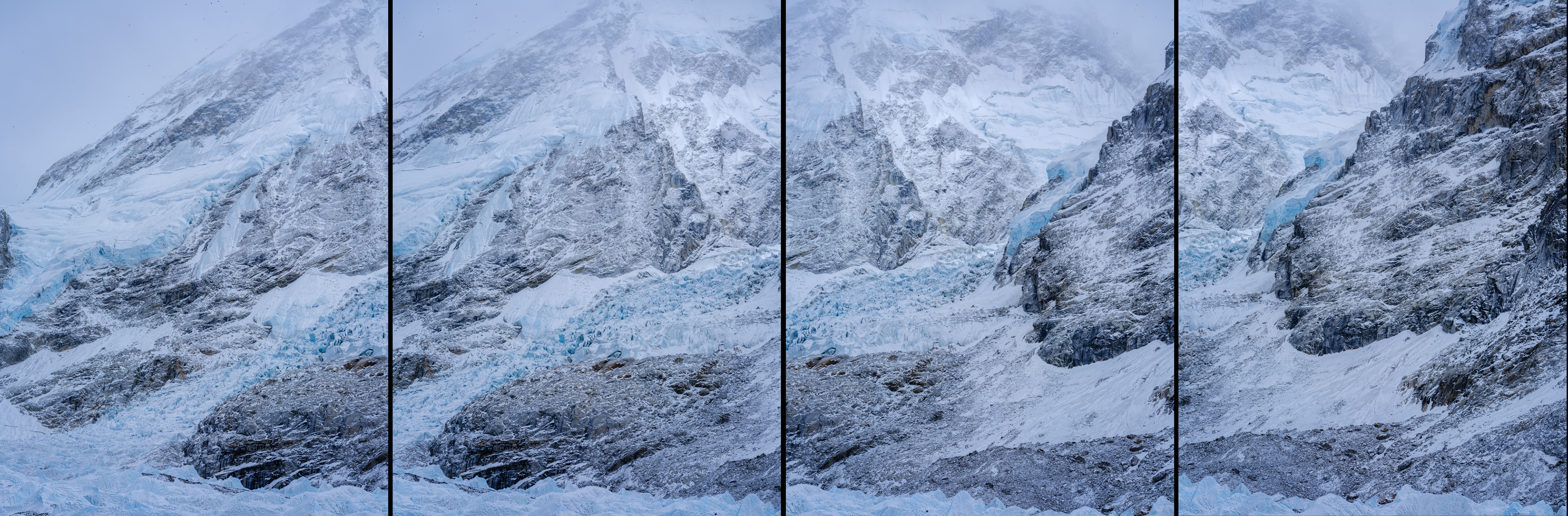
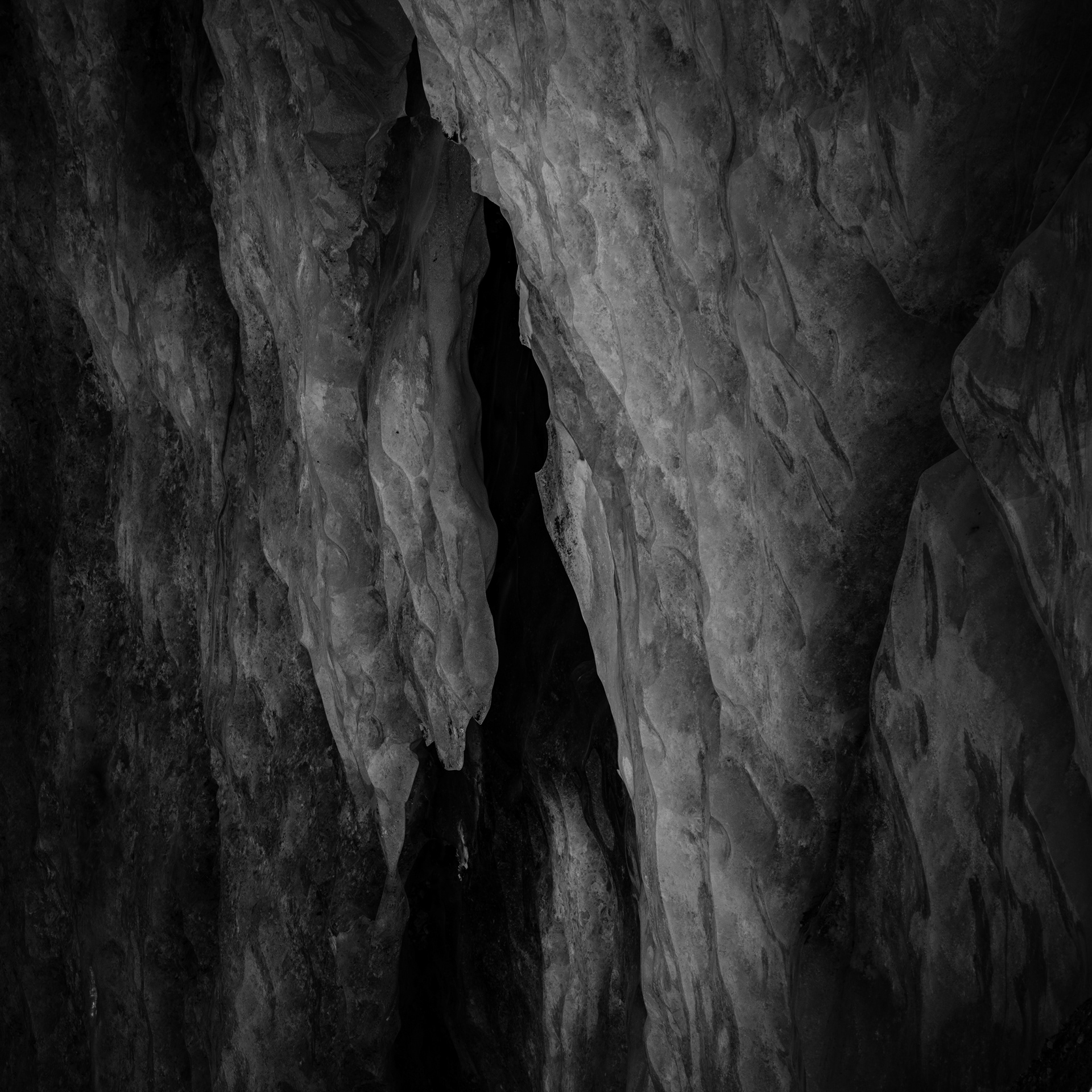
The blue colour of the Khumbu icefall on Everest signifies old, densely packed ice. It takes approximately 4.3 years for the ice to tumble the 1.5 km (1 mile) length of the icefall.
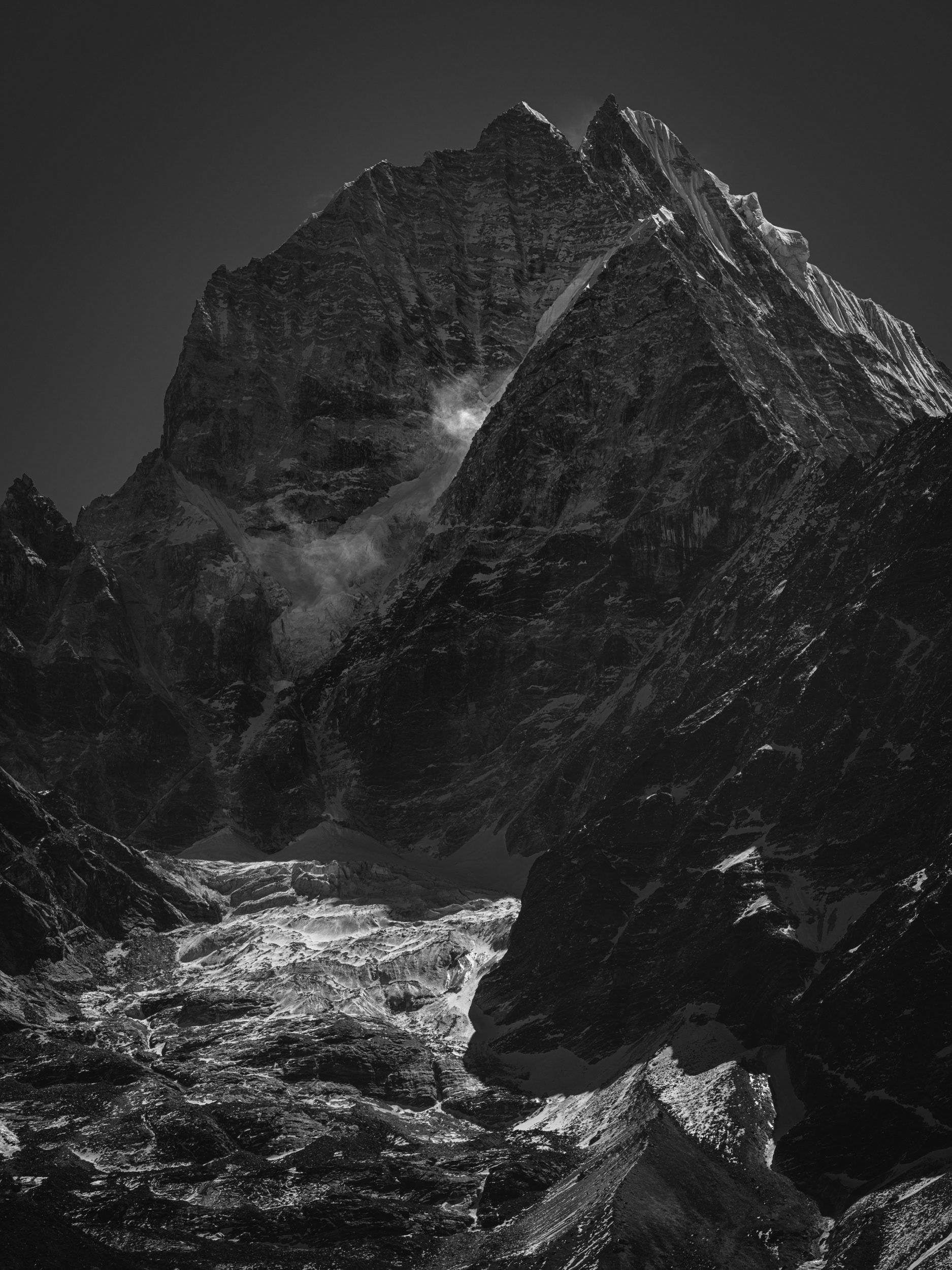
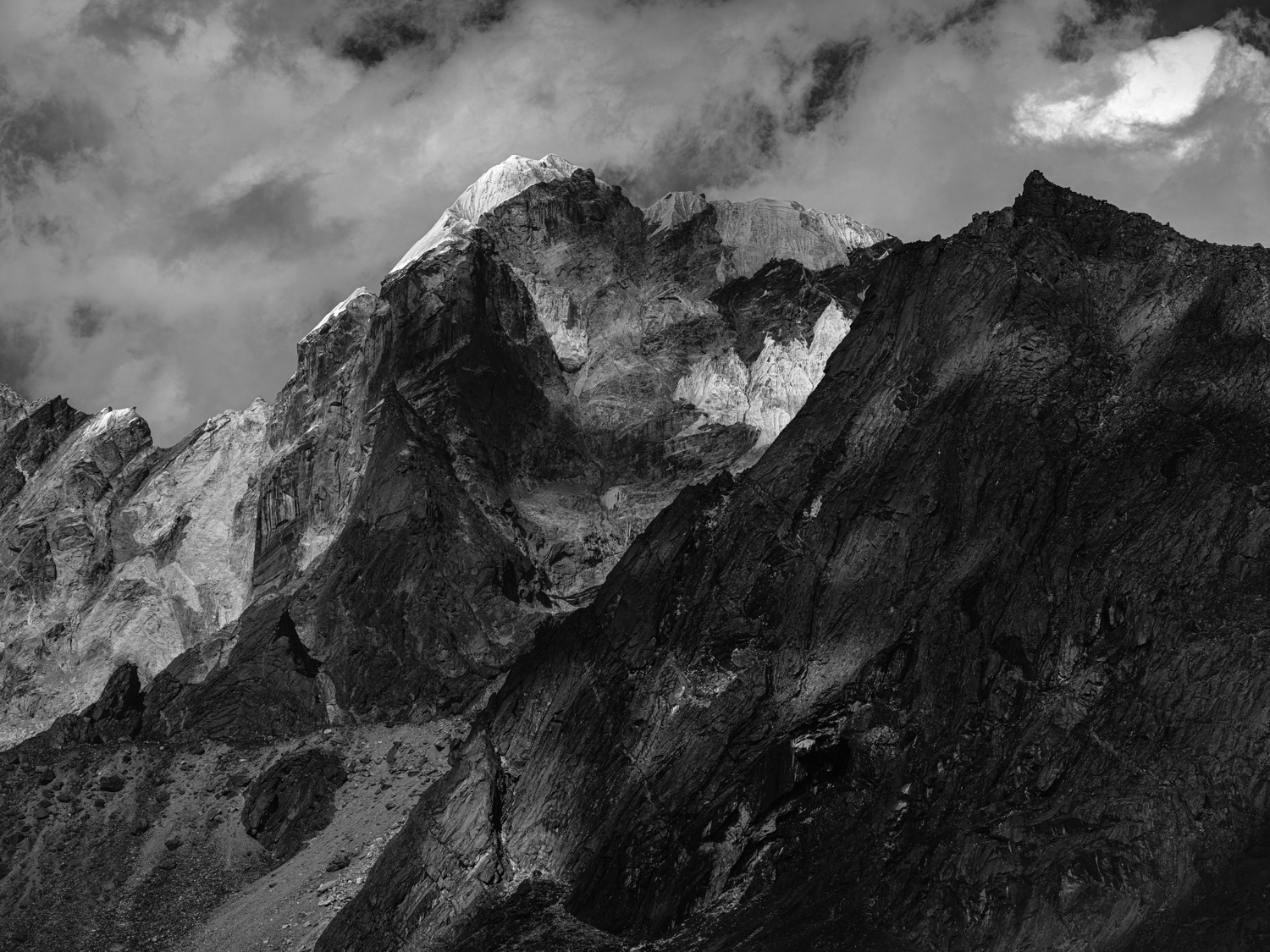
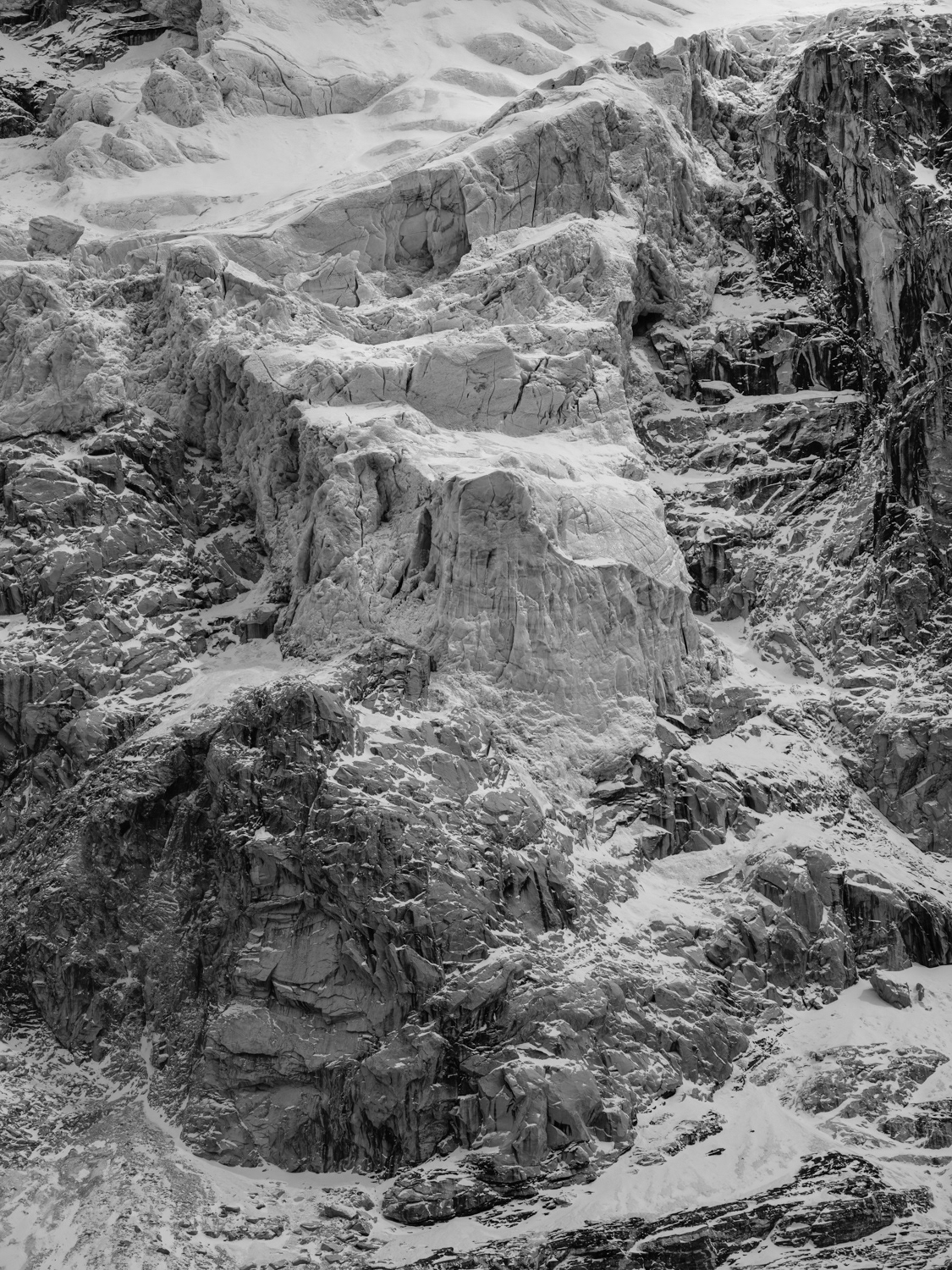
Avalanche on Tabuche
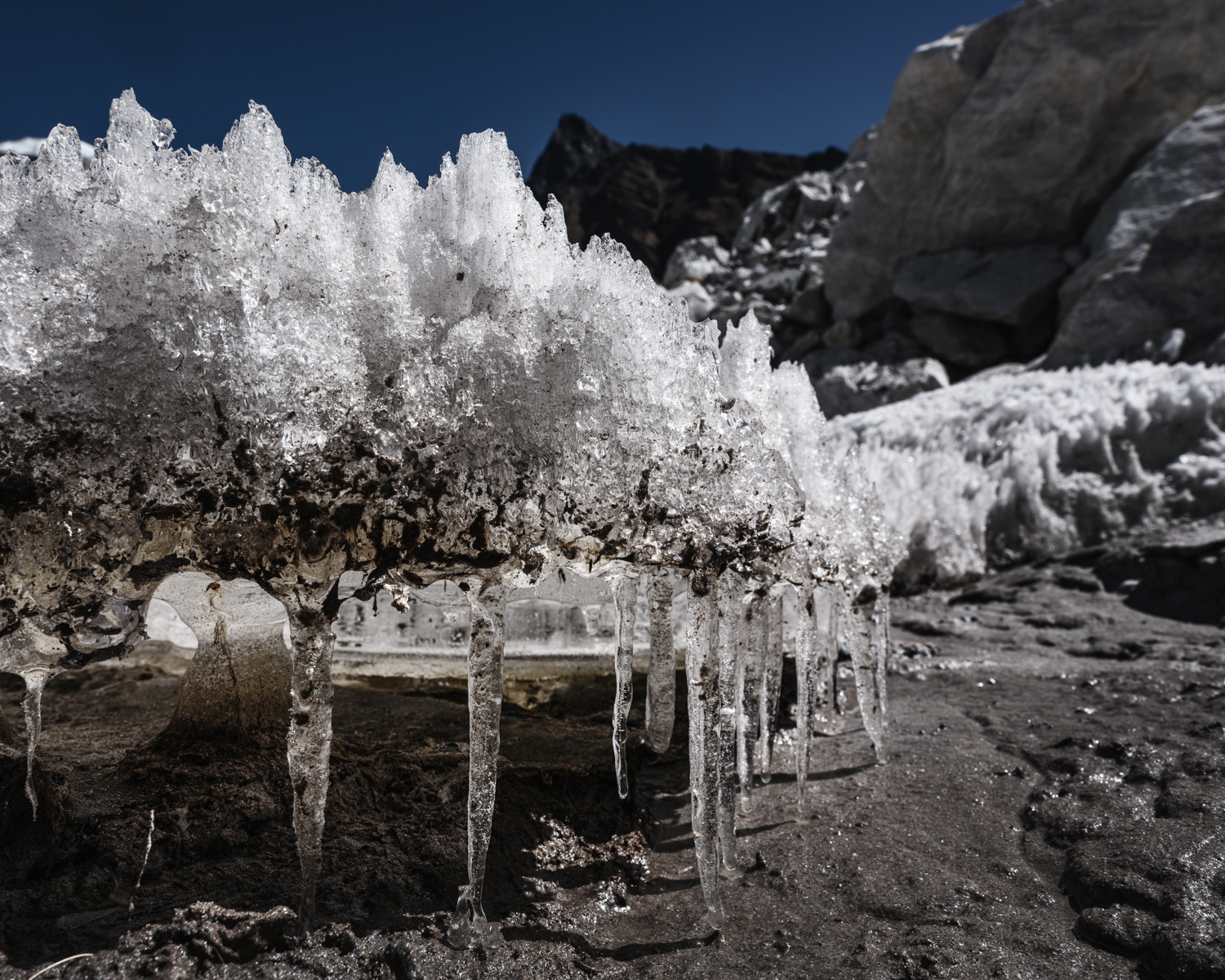
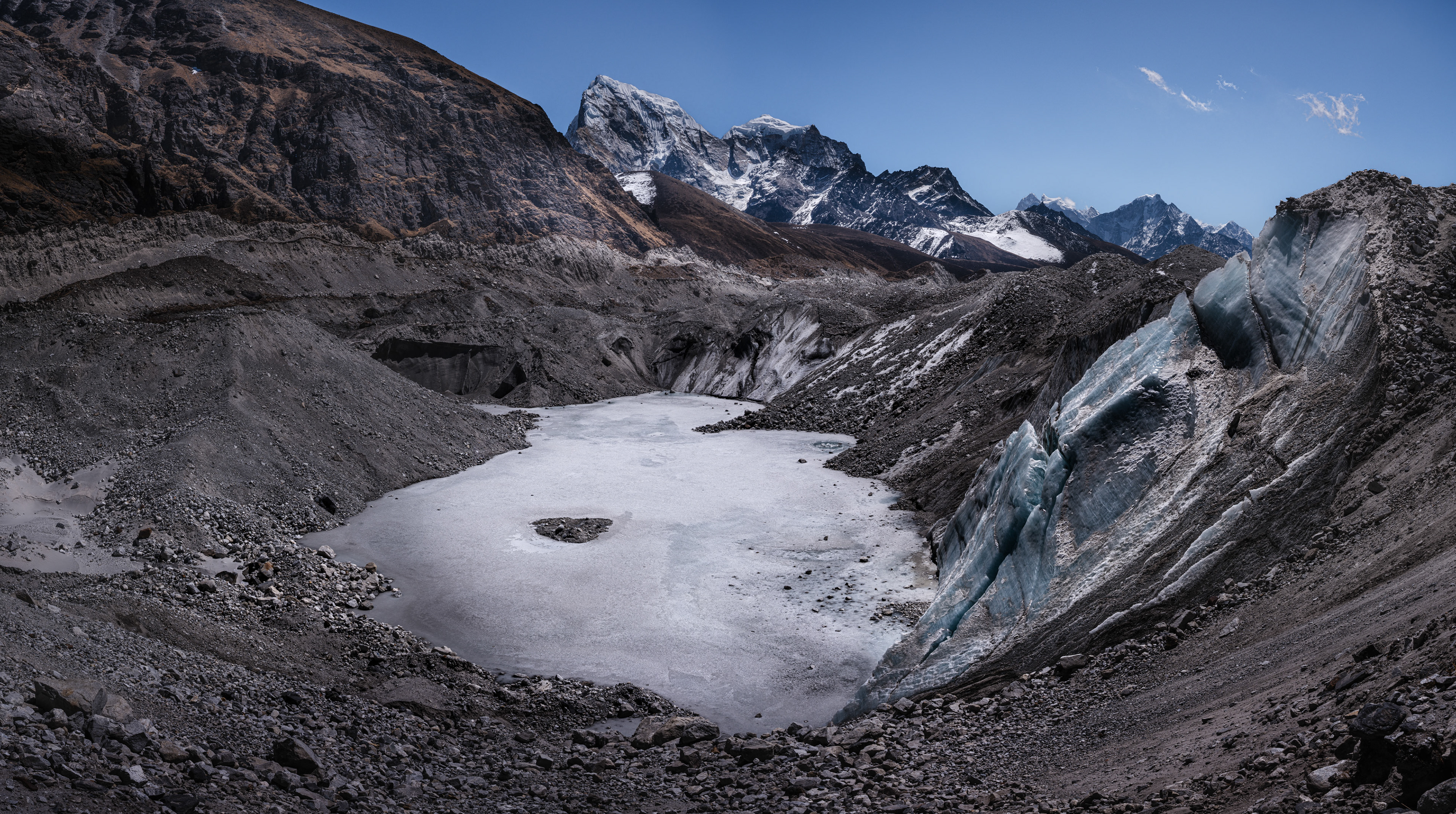
A temporary presence
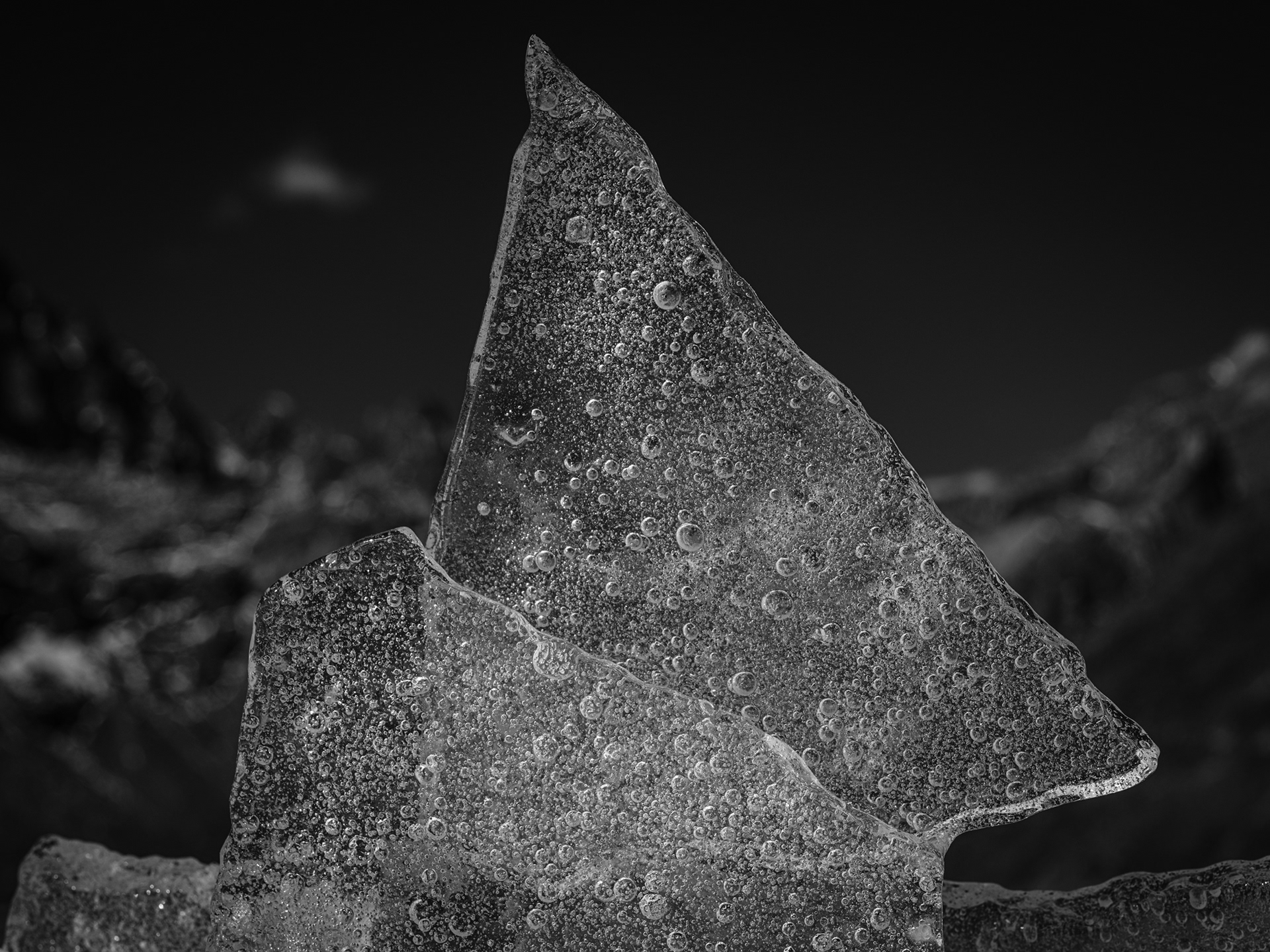
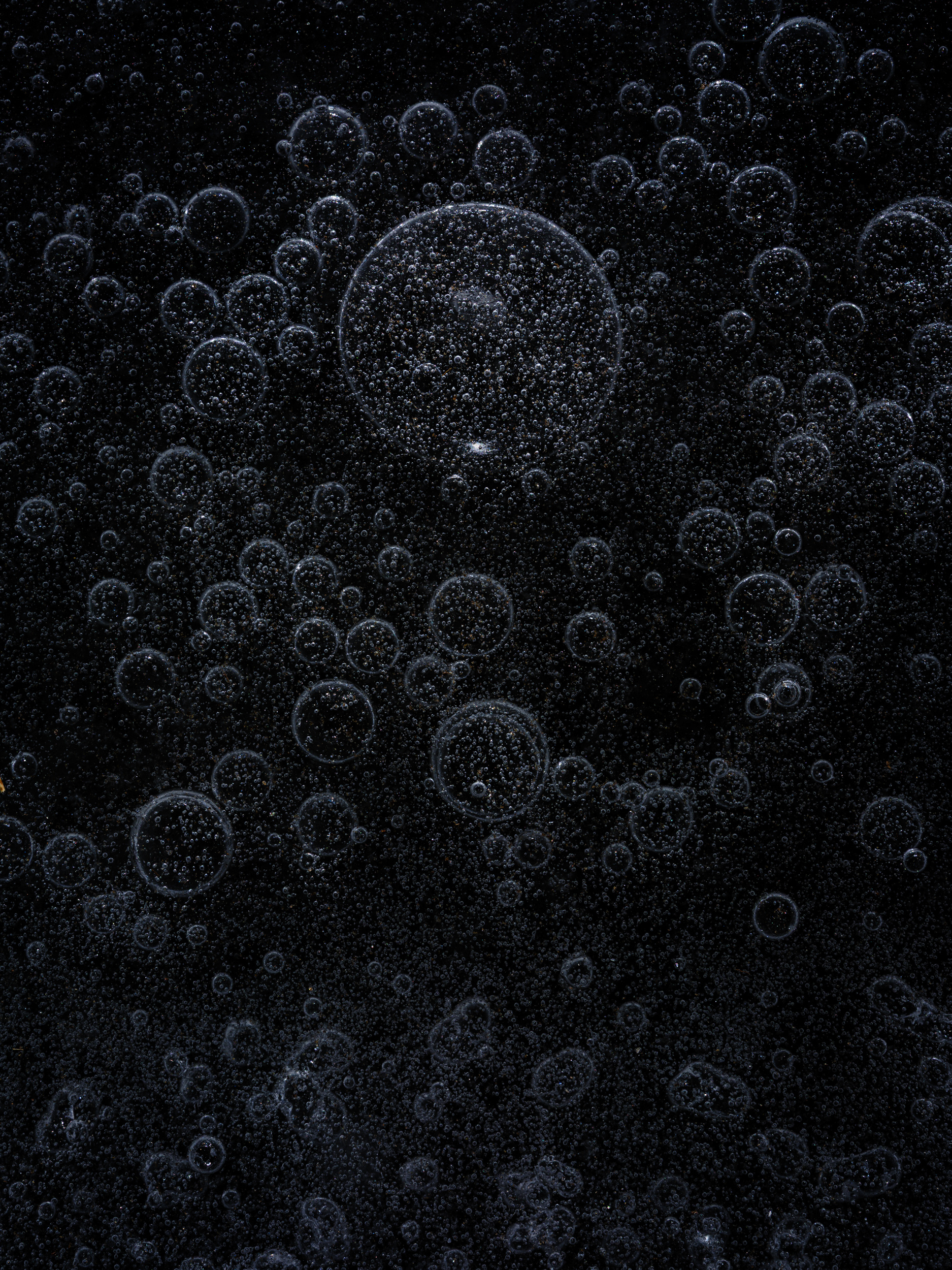
Carbon dioxide and methane gases from decomposing organic matter are trapped while frozen. As the temperature rises, the gases are released into the atmosphere.
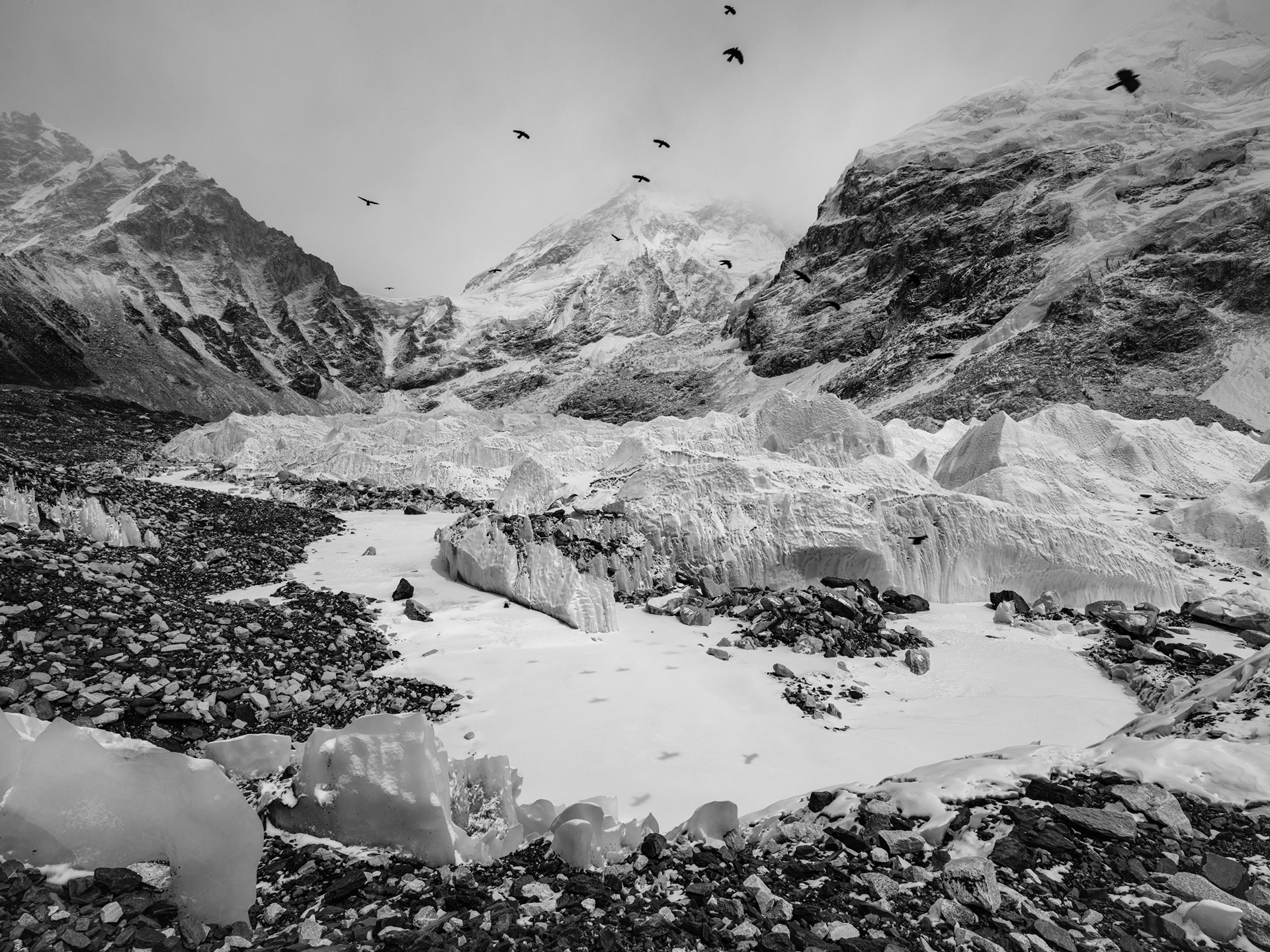
Shapes and shadows of Alpine choughs as they perform noisy aerobatics over Everest base camp. Their collective noun is a ‘chattering’.
Lifeform
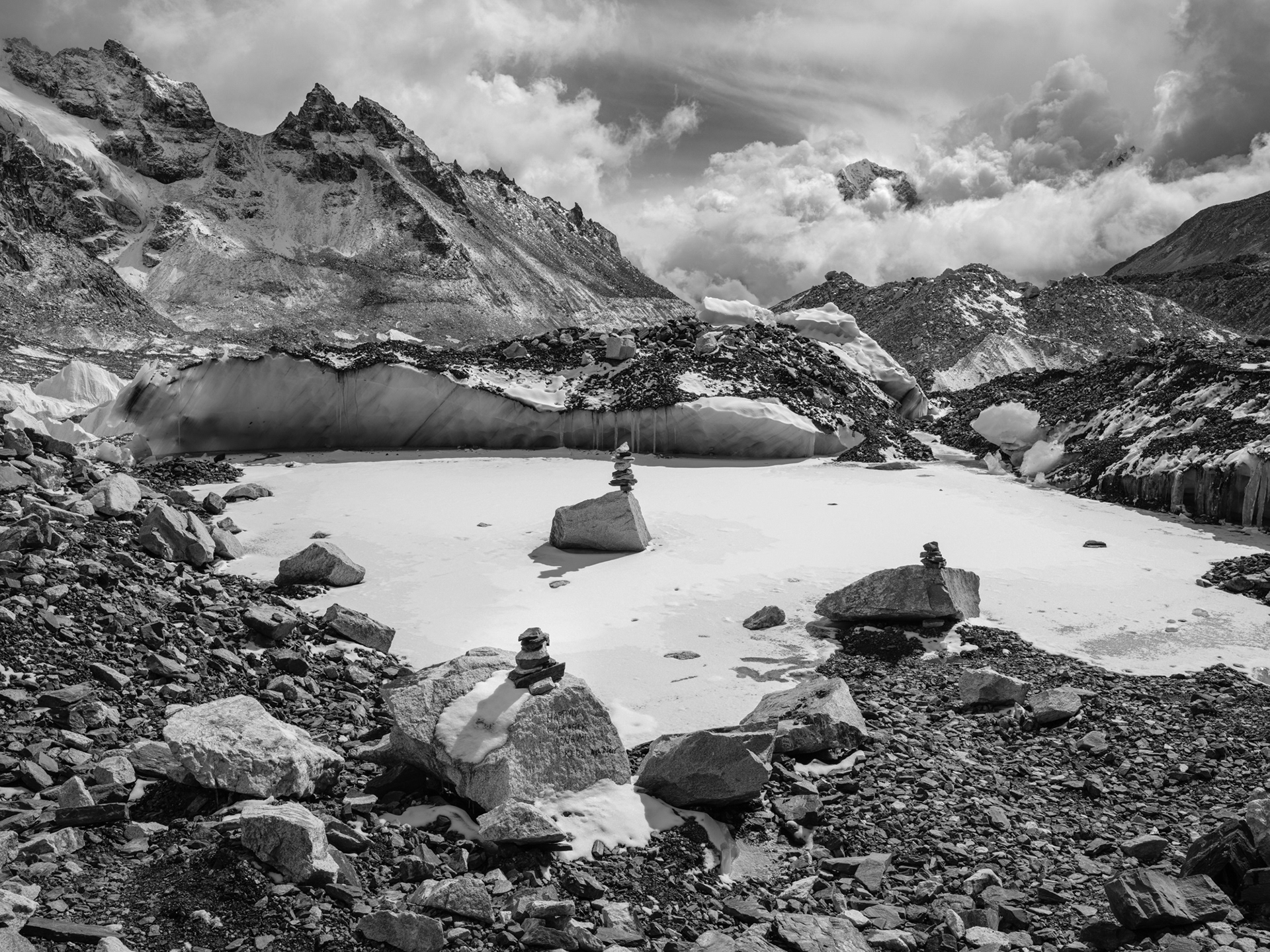
Man-made cairns at Everest base camp. The writing on the rock in the foreground reads: 'Happily ever after, love my kids'.
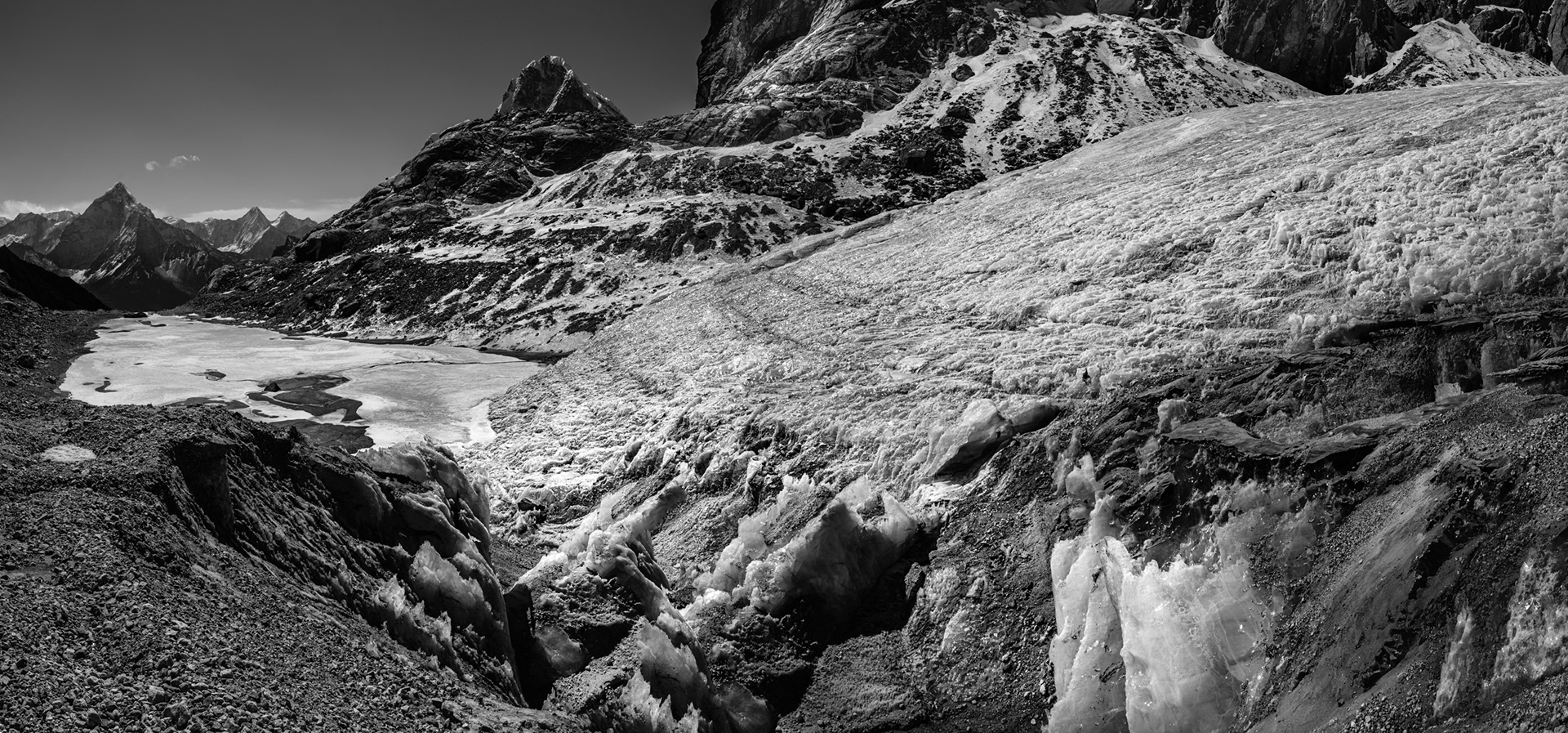
Glaciers can move from a few cm to 50m each day.
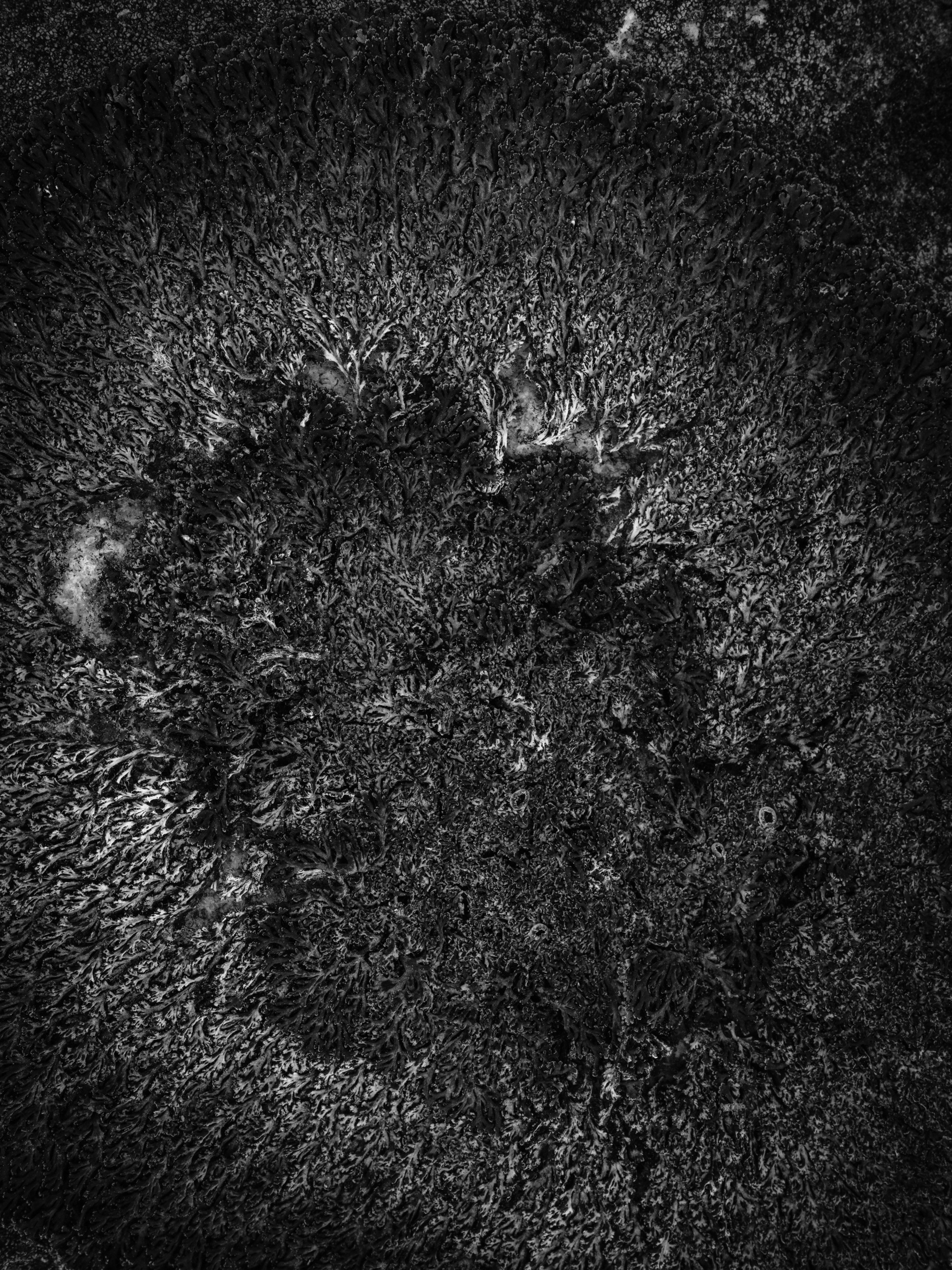
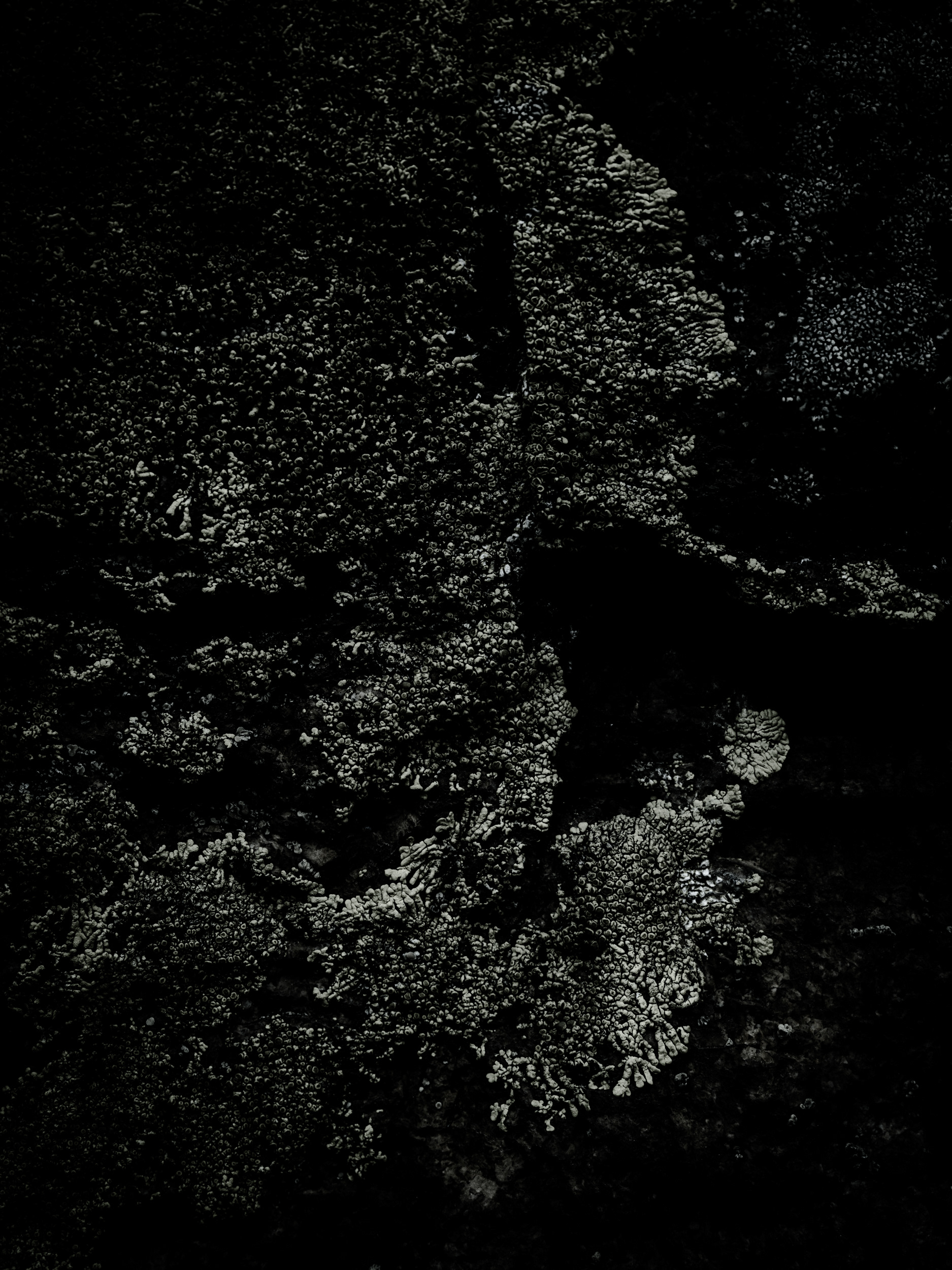
Sunburst lichens are highly resilient: they live on bare rock and can endure extreme temperatures and high altitudes.
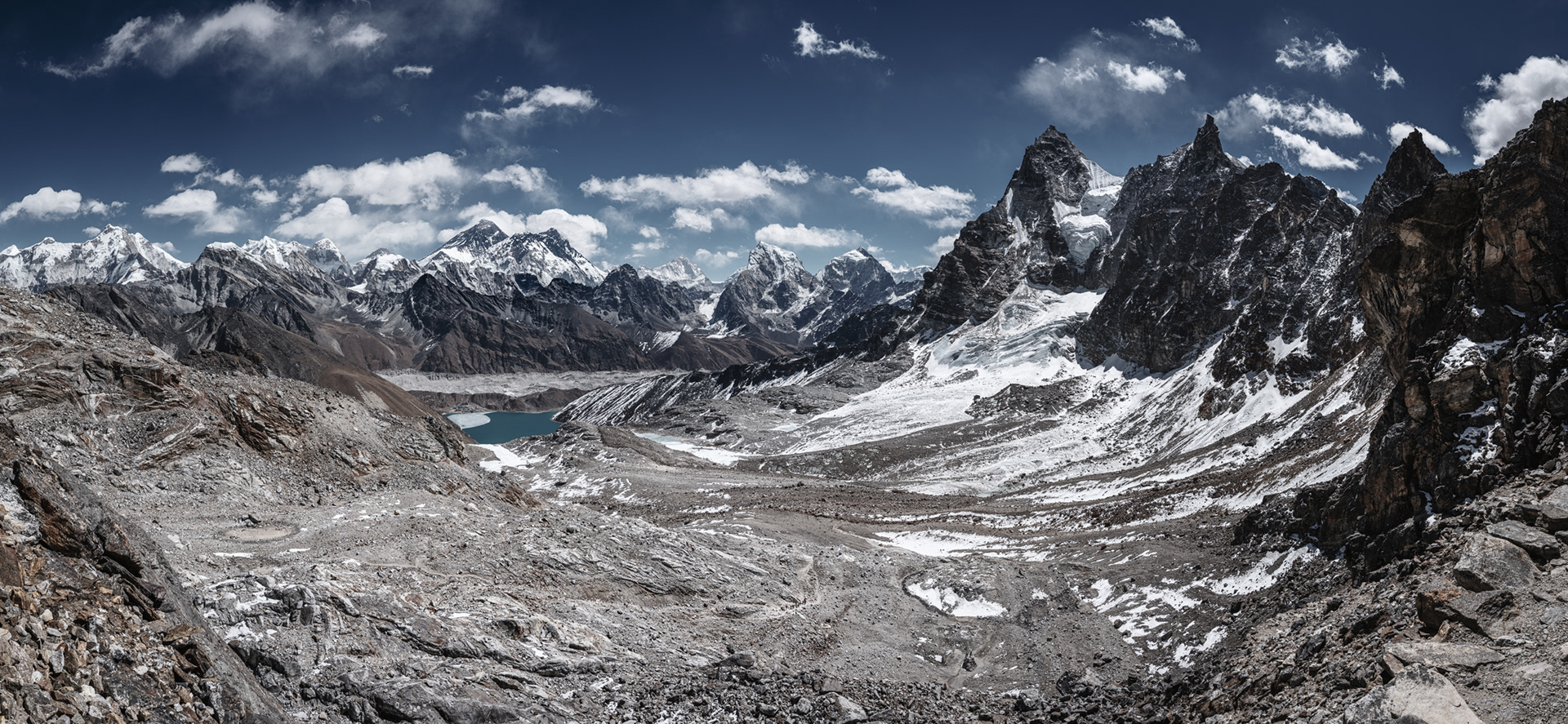
The birthplace of glaciers: the view from Renjo La pass, 5360m (17585 ft), with Everest on the horizon. There’s a tiny group of people at the bottom centre of the frame. Despite the apparent insignificance, human impact is vast.
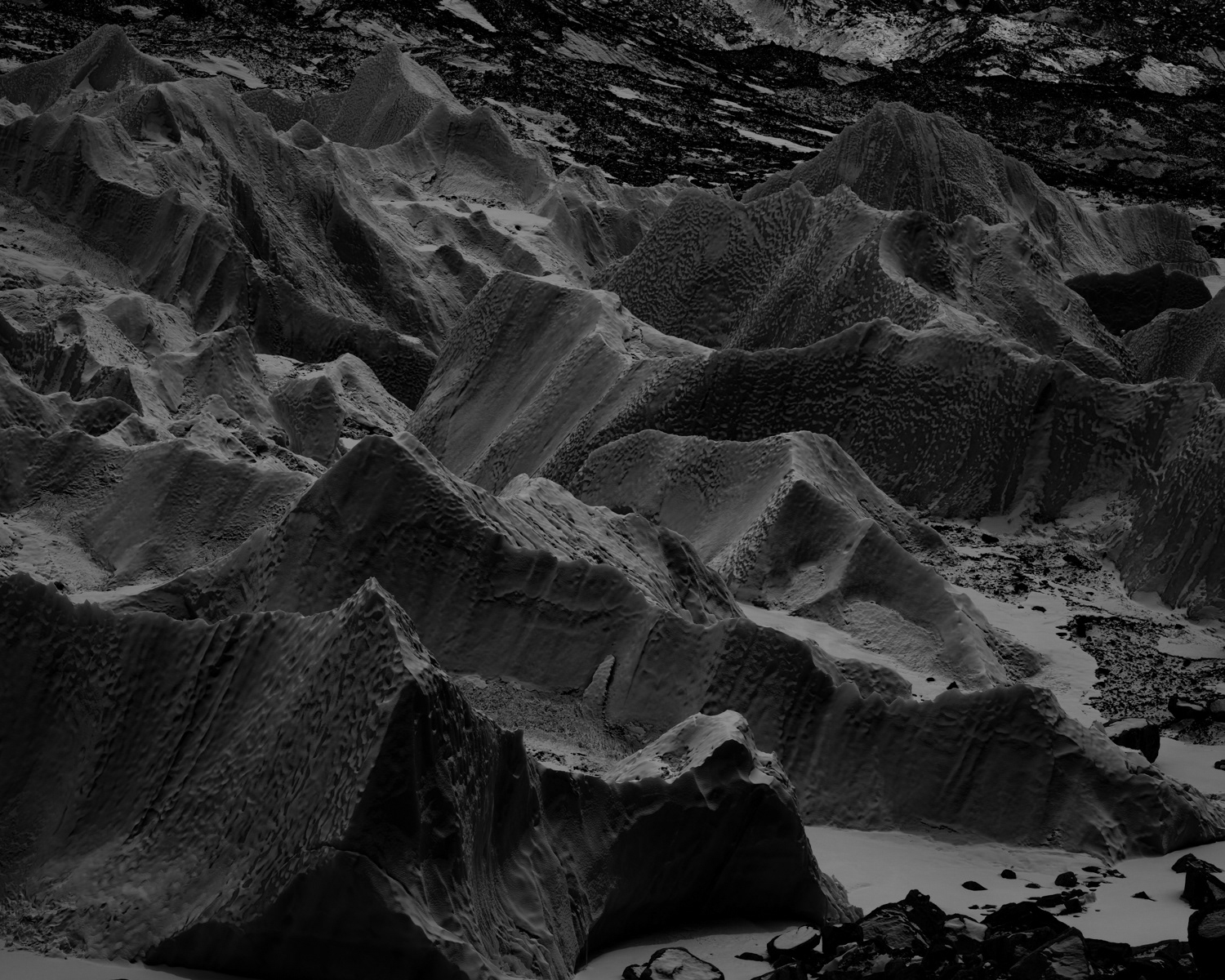
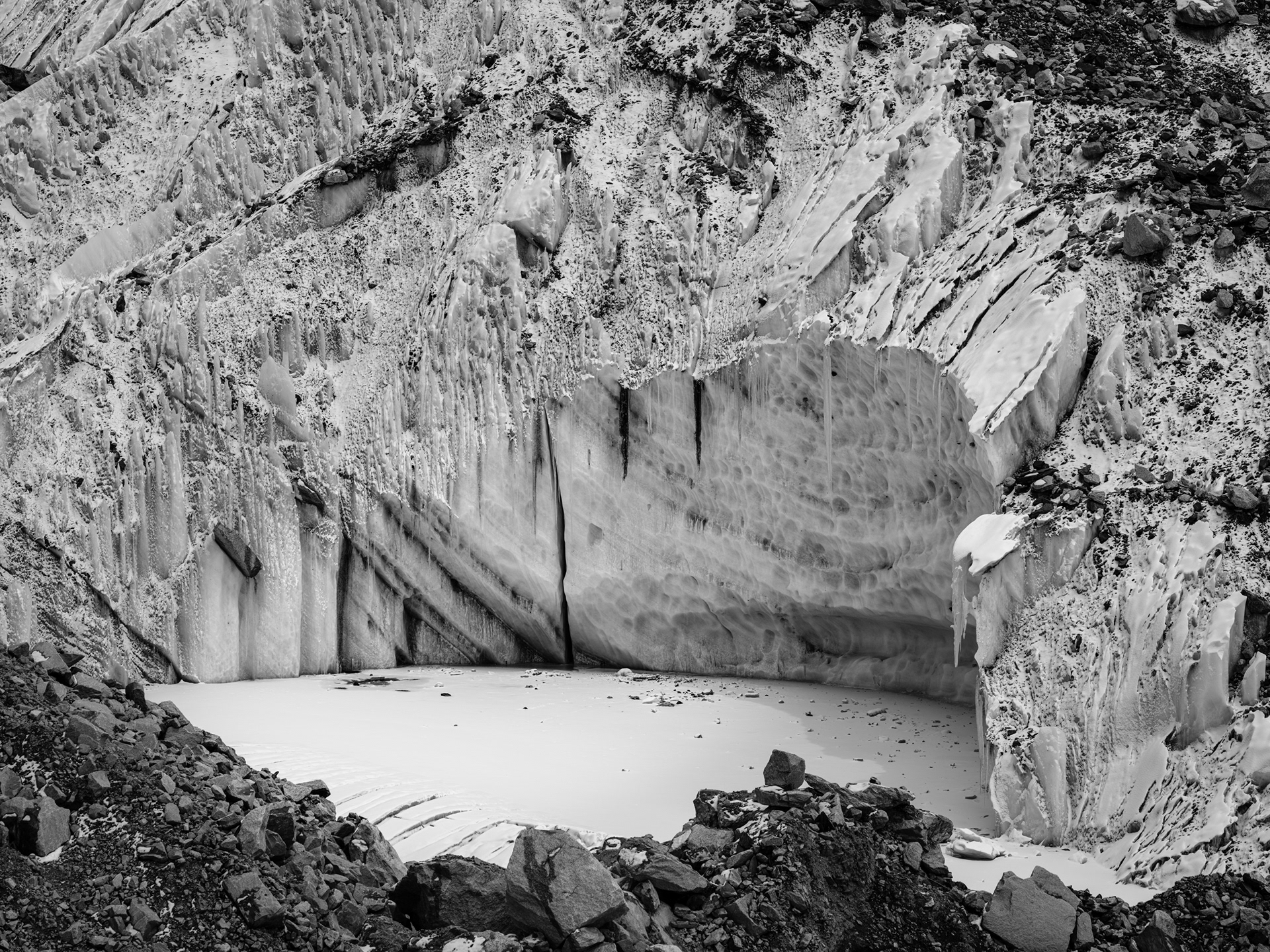
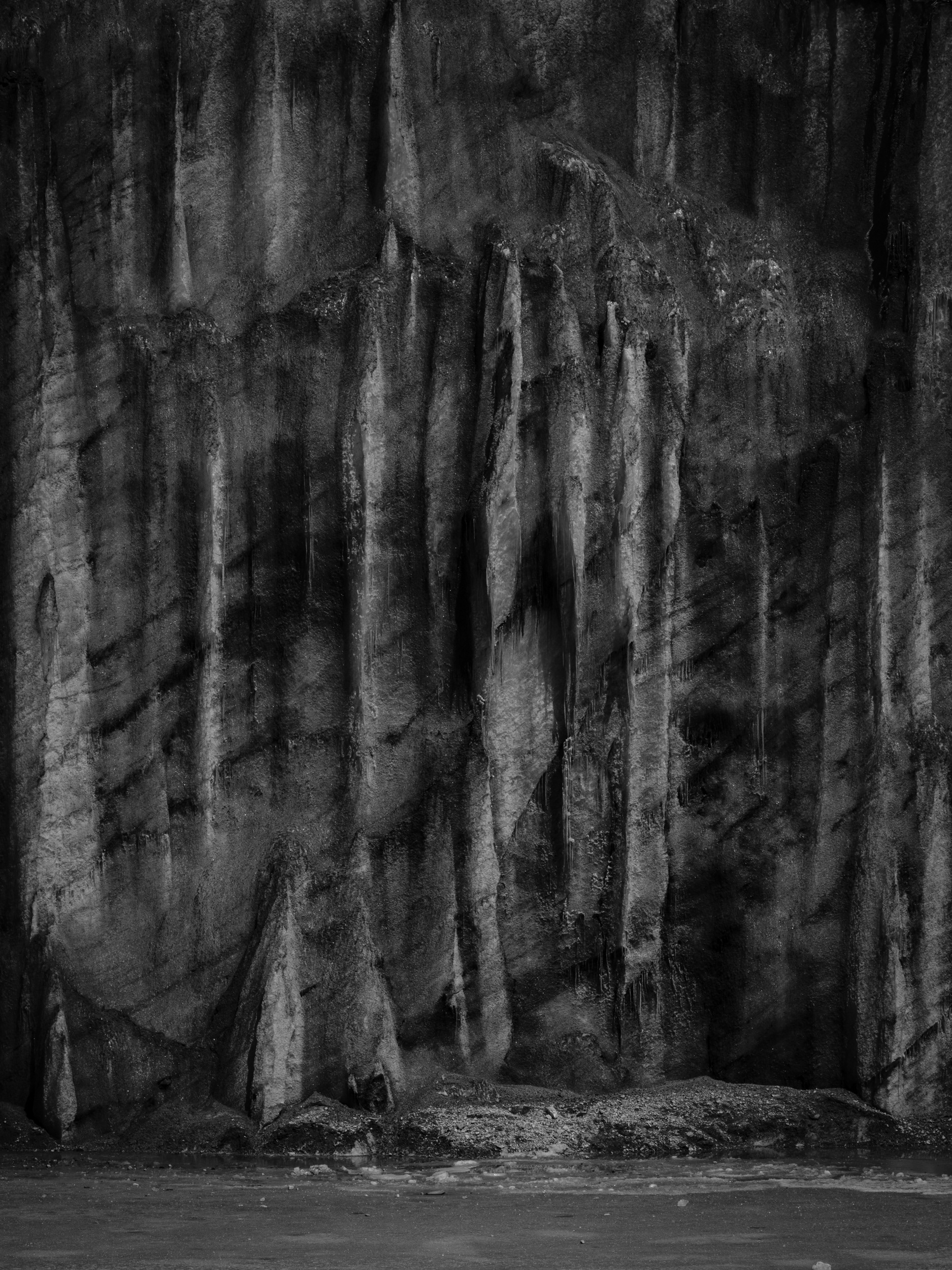
Thousands of years in the making, the story of a glacier’s life is etched onto its surface as it carves through the terrain.
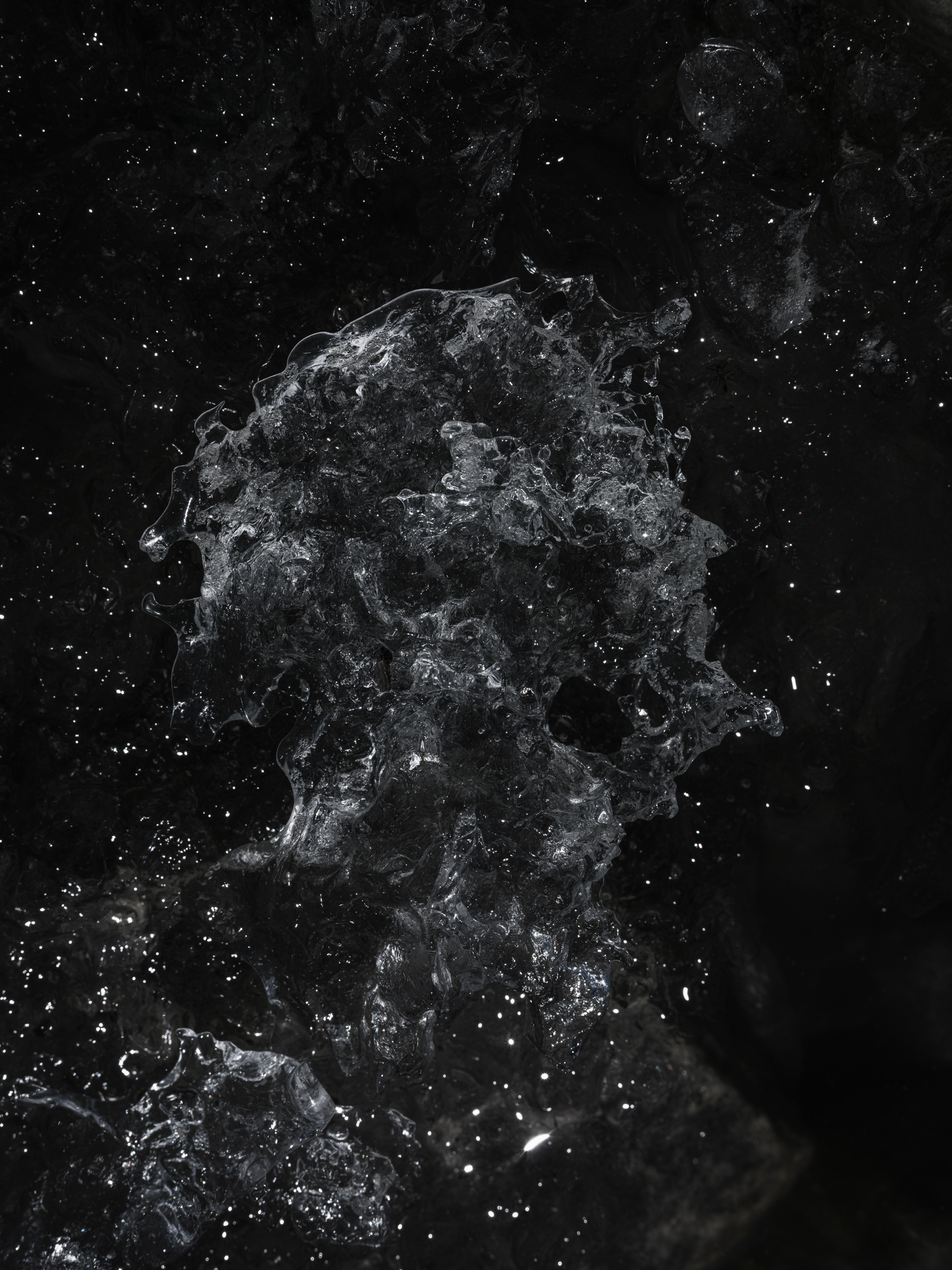
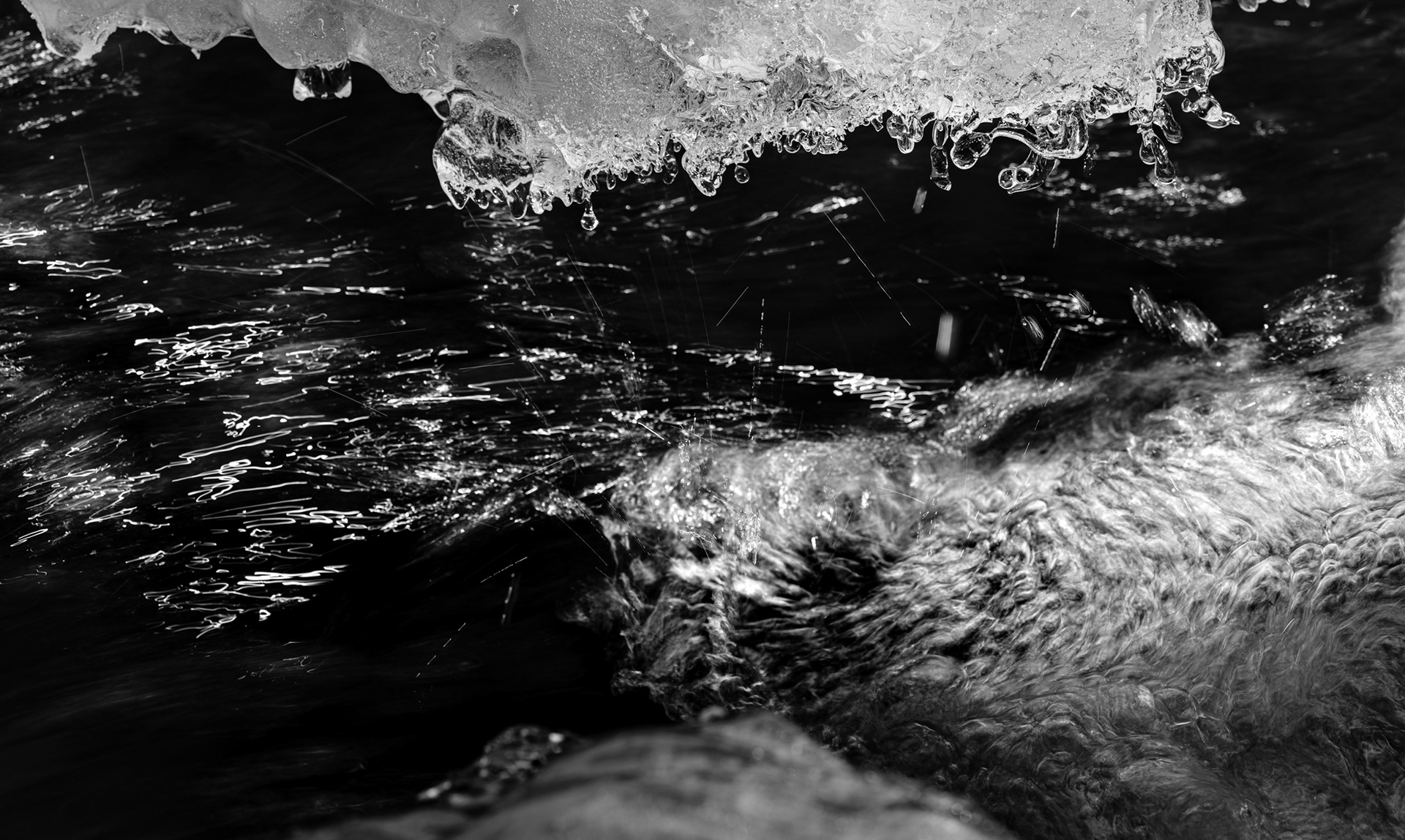
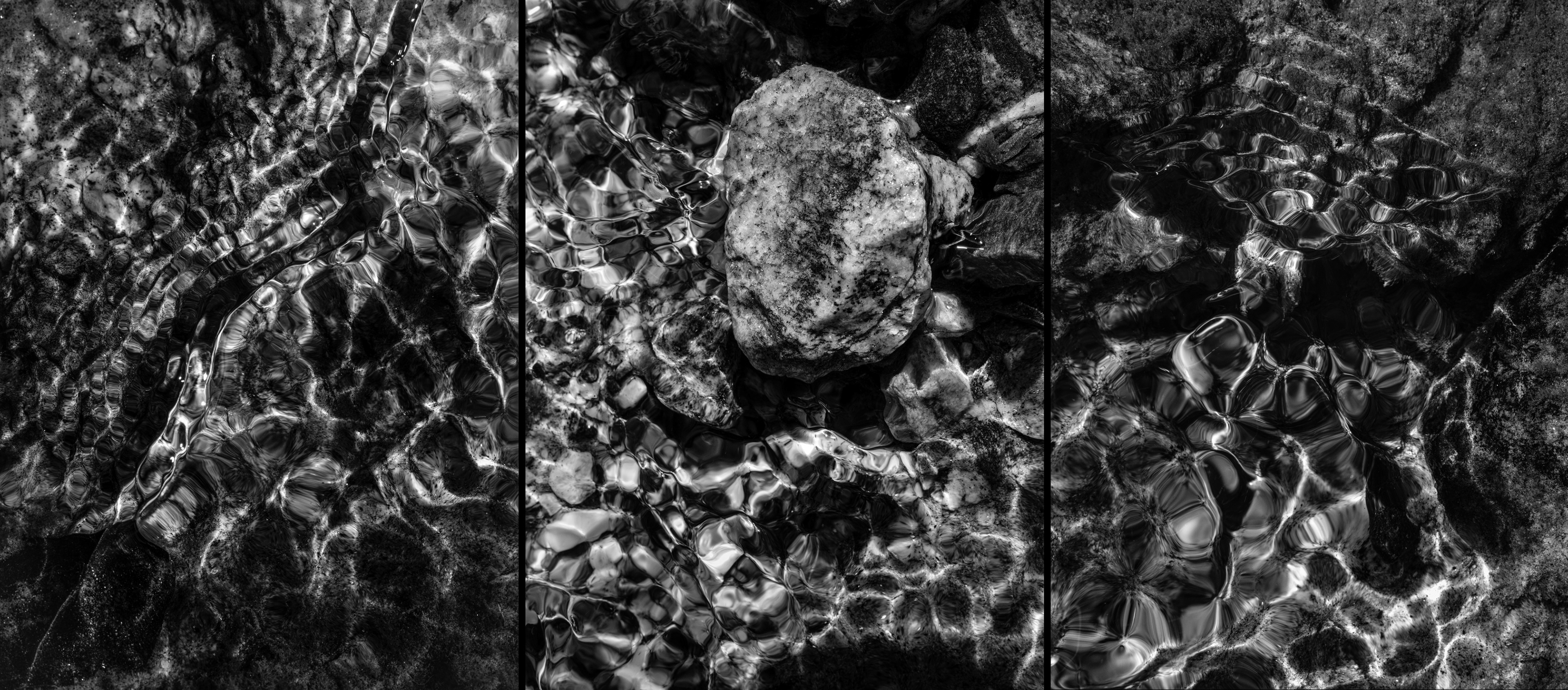
The frenzied discussion between ice and water has been running for billions of years.
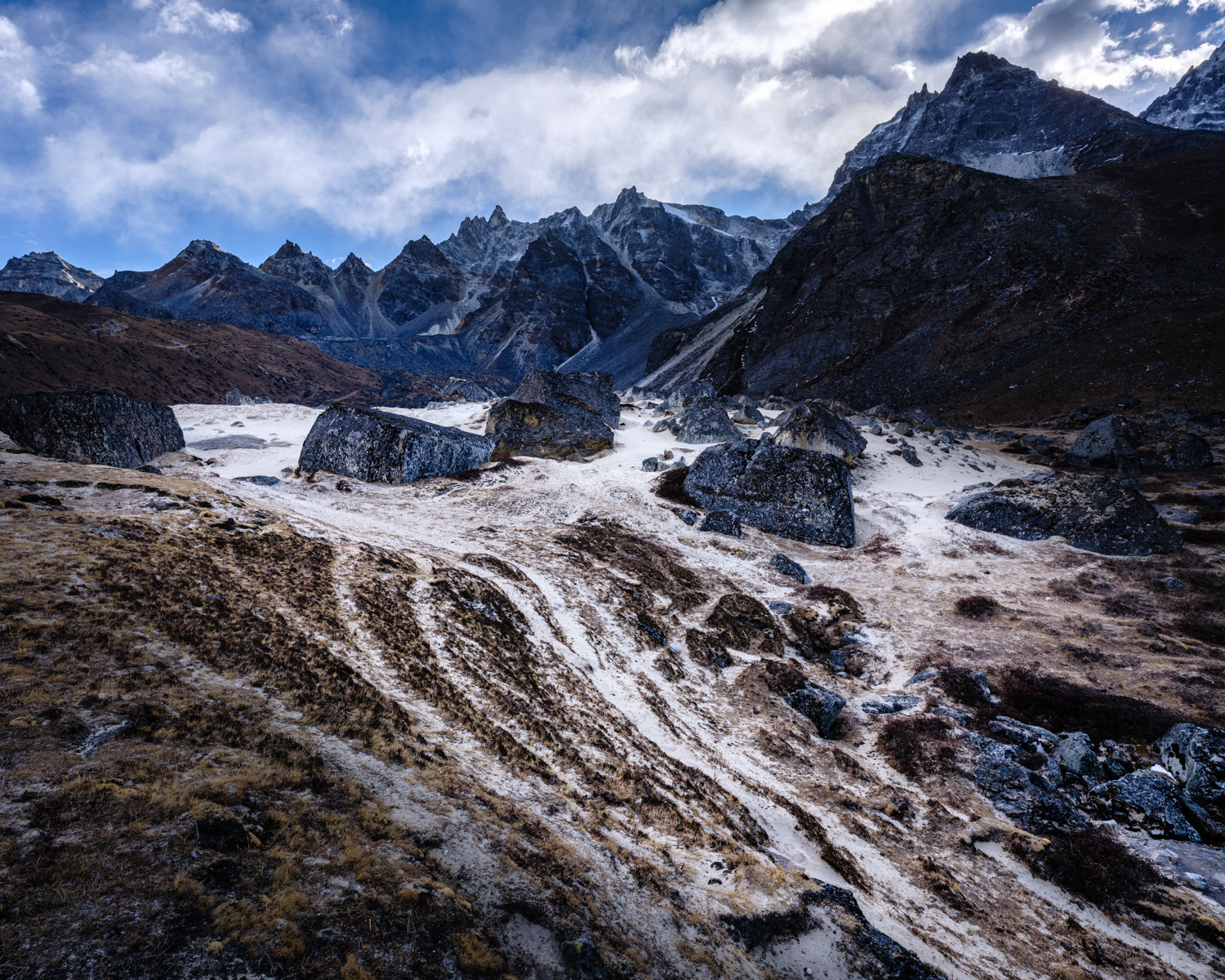
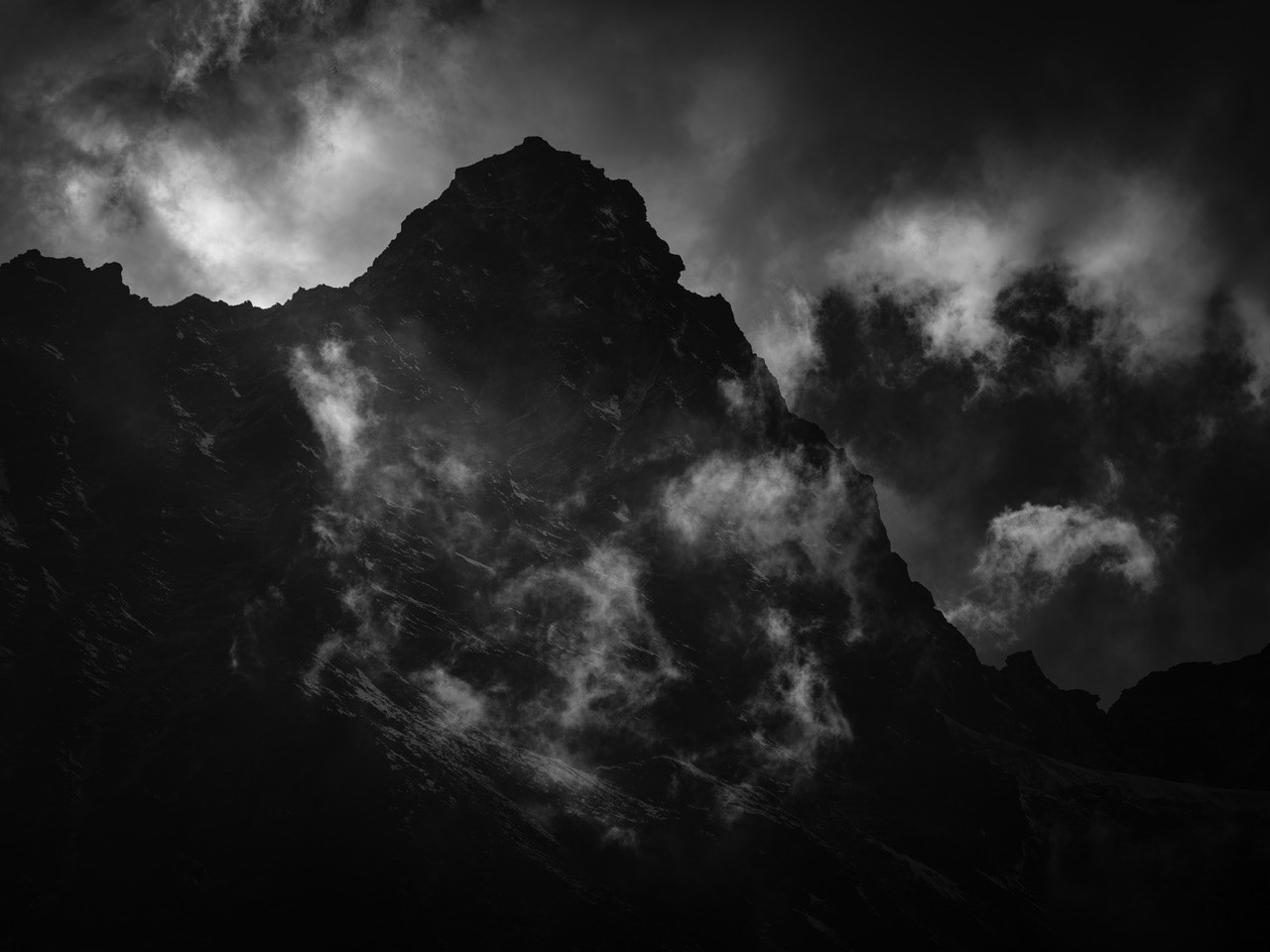
The mountains were forged 50 million years ago, following the collision between the Indian and Eurasian tectonic plates. The region remains highly volatile today.
Different timescales: lichens grow about 1mm per year, and can live for thousands of years.
Rising temperatures are causing sudden and catastrophic glacial lake outburst flooding across the region.
Liminal spaces
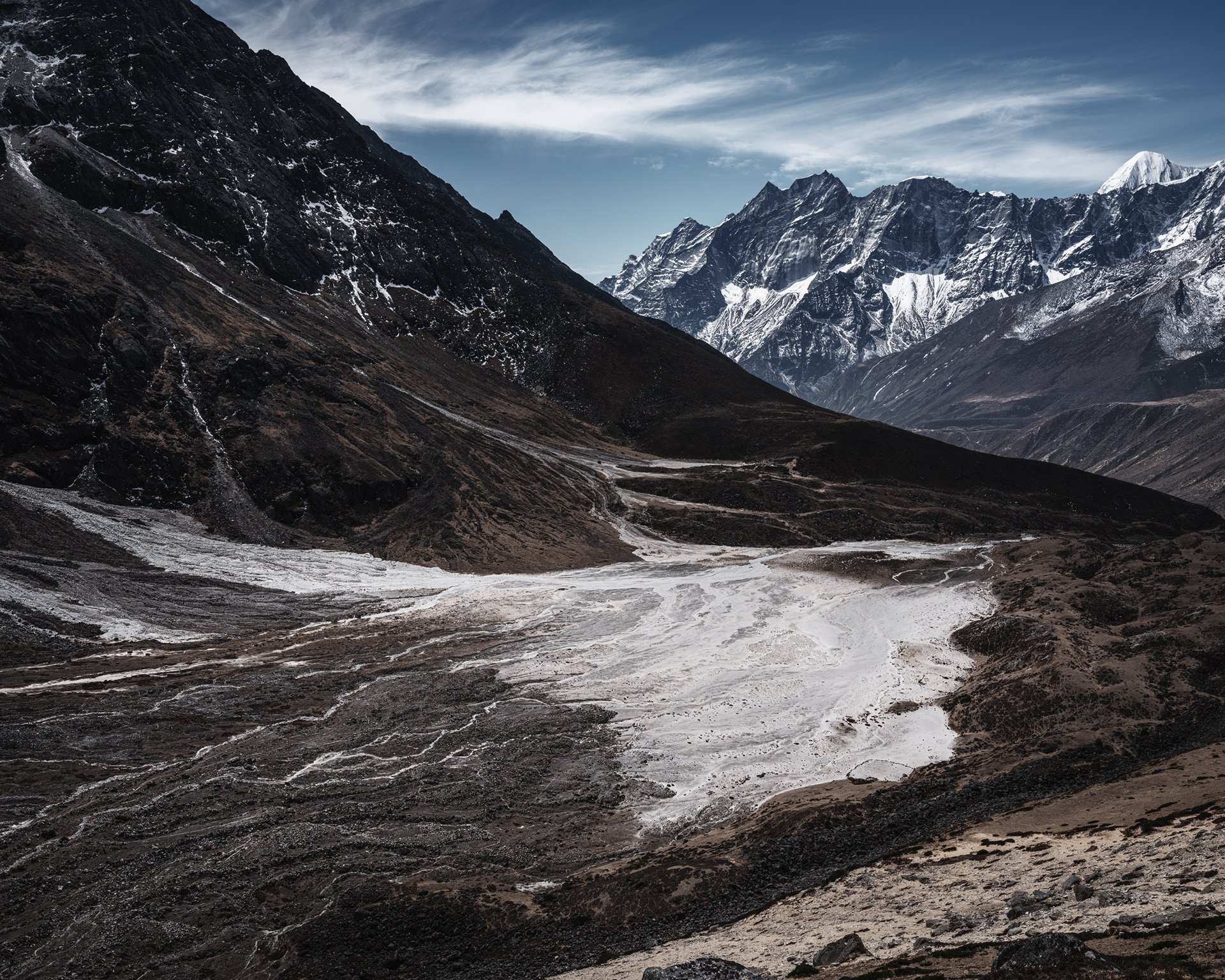
Dry river bed at 4300m
Disruptions
Vanishing ice: erratic weather patterns are causing water supplies to dwindle throughout the region.
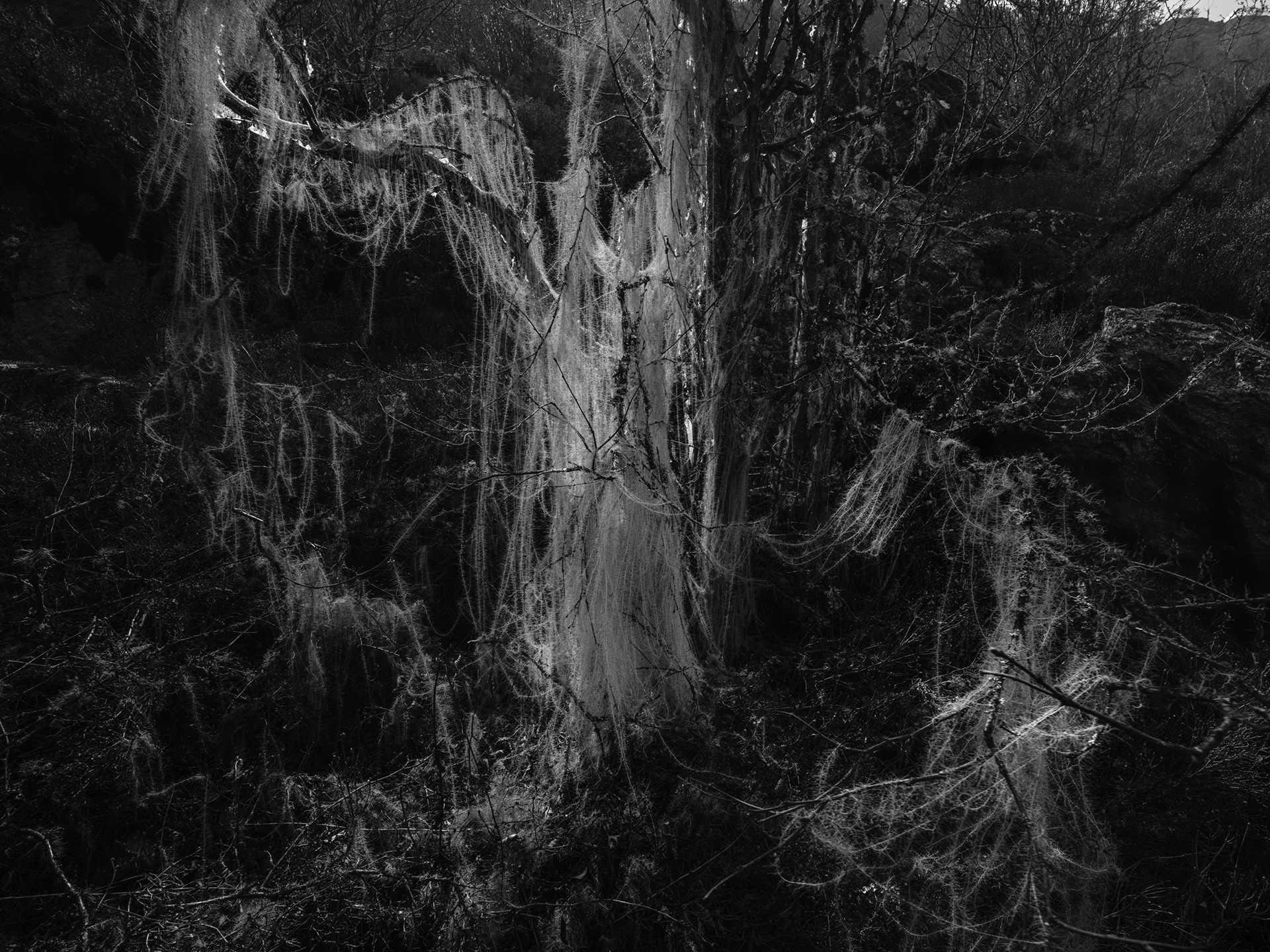
The light from the setting sun appears to transform a lichen-strewn birch tree into a forest spirit. Lichens are sensitive bio indicators of air quality, thriving in unpolluted environments.
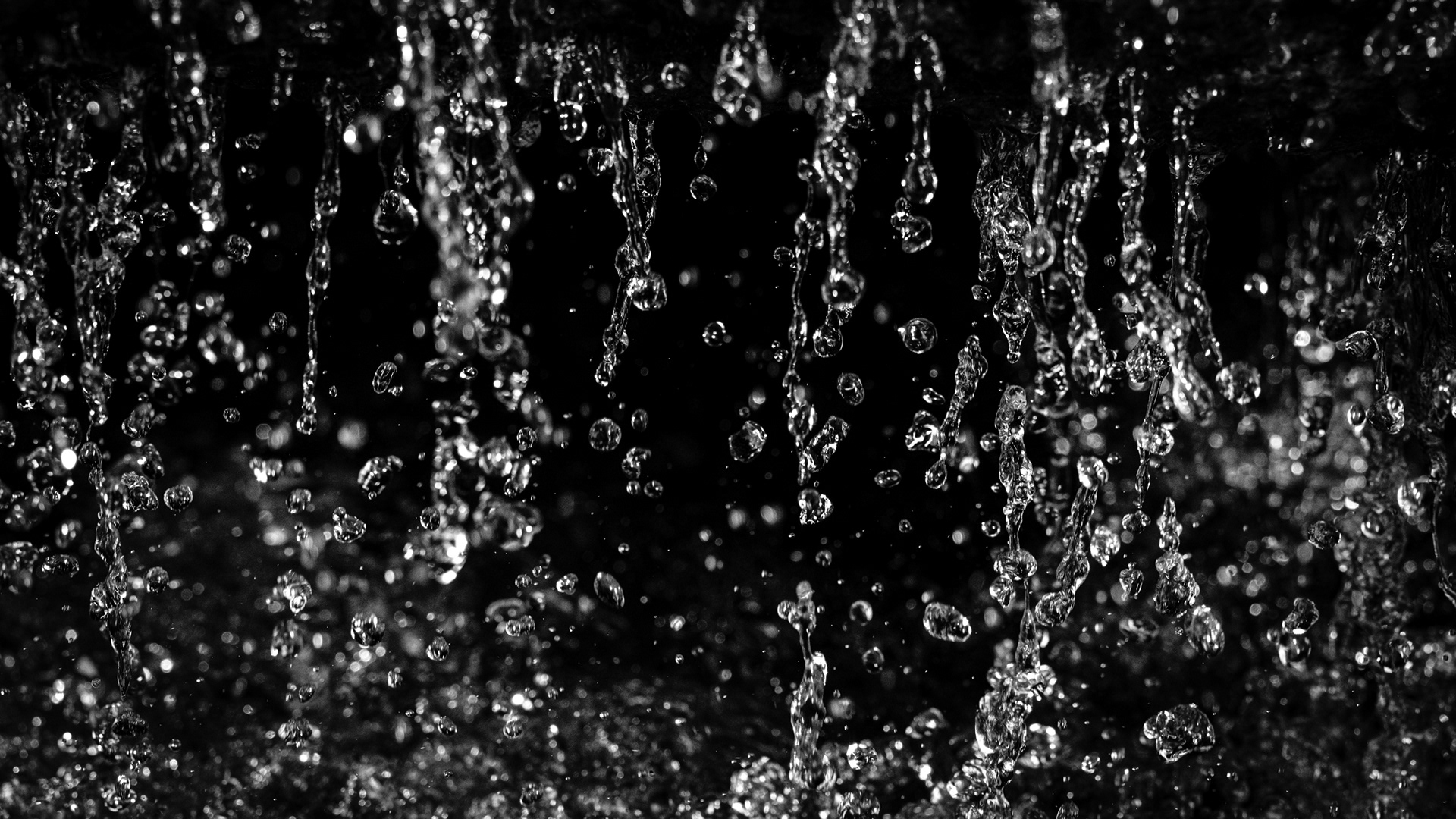
The burble of water
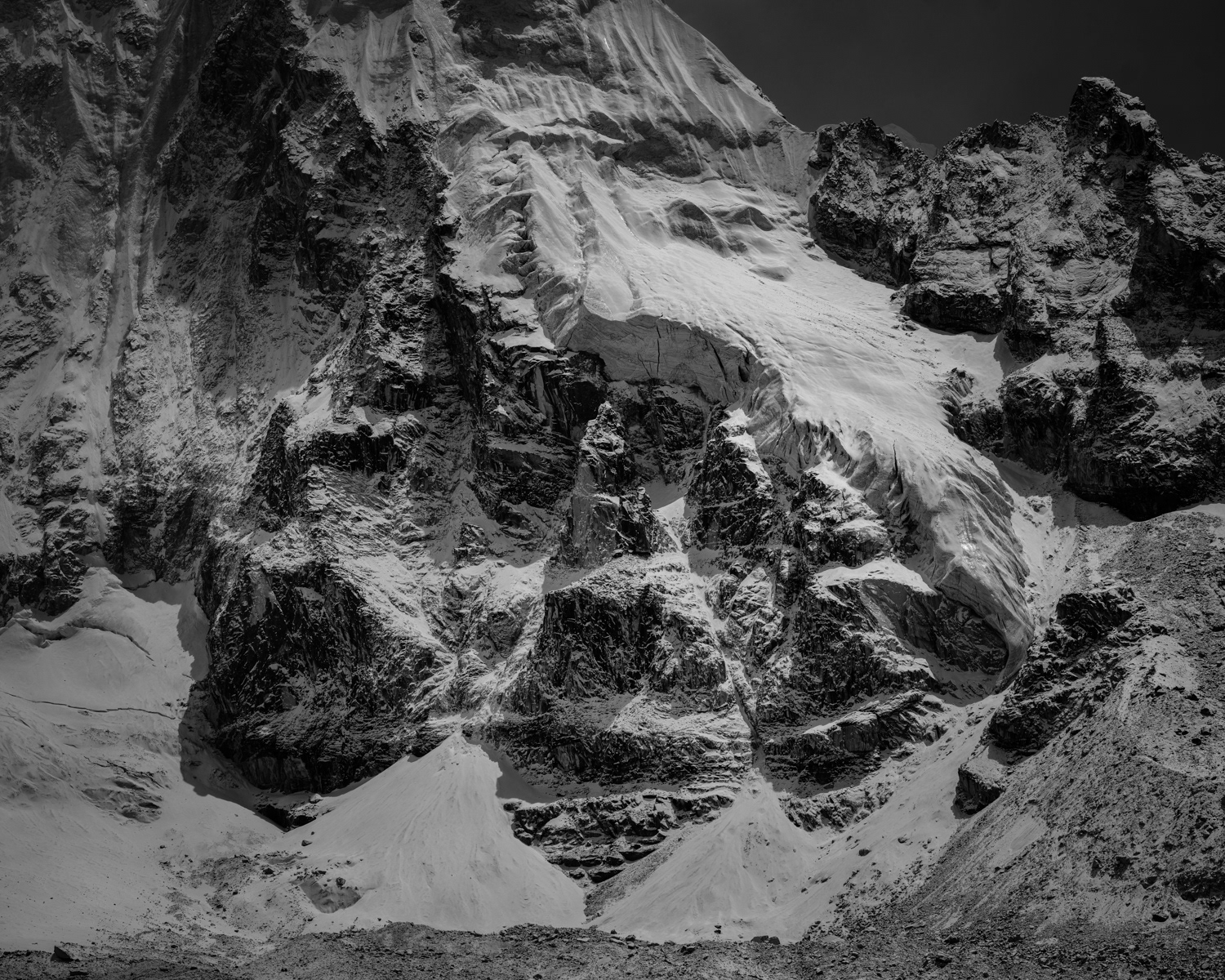
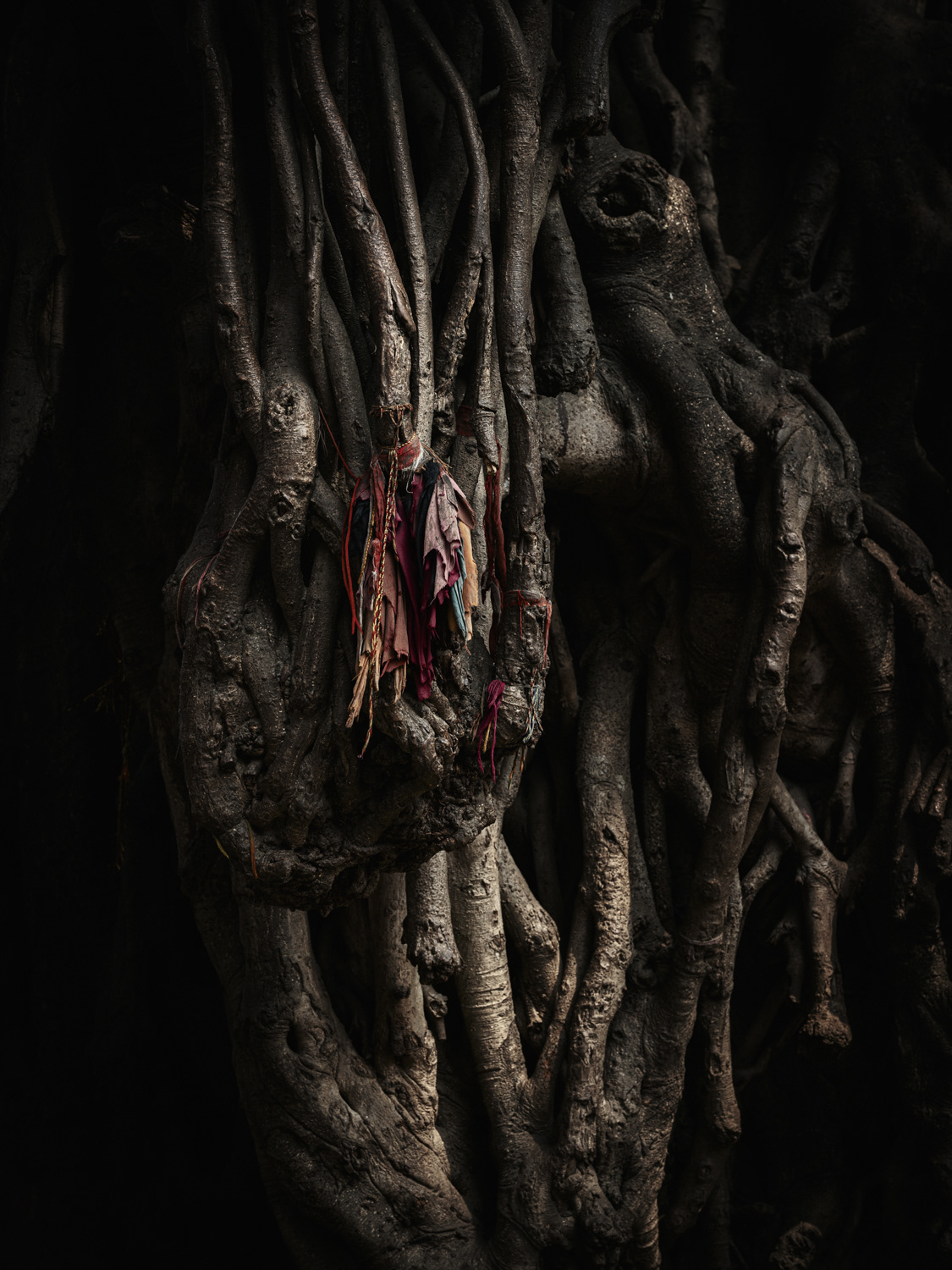
Face pareidolia: where the brain perceives faces in random objects. Some people interpret such phenomena as tangible connections to the divine.
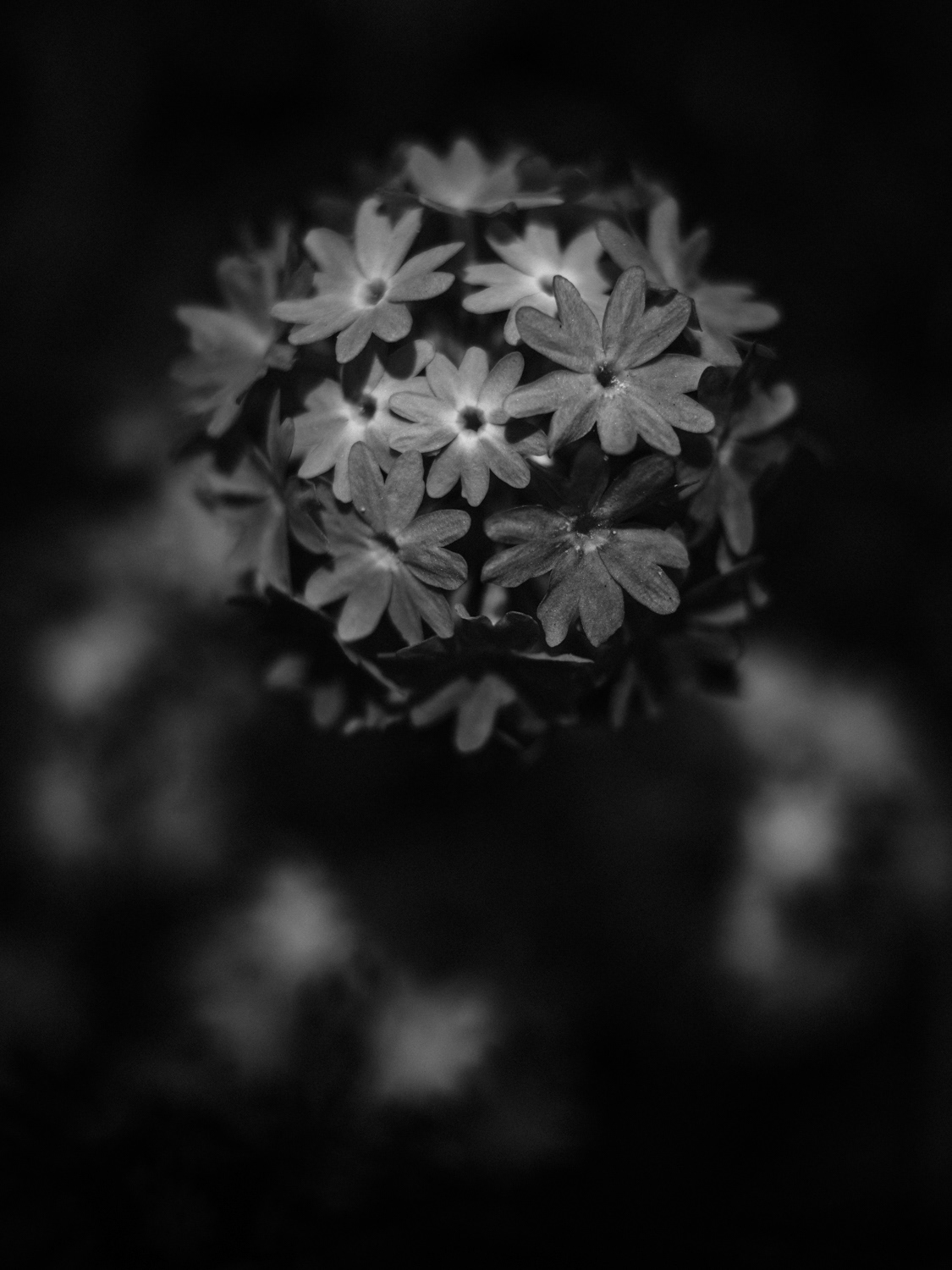
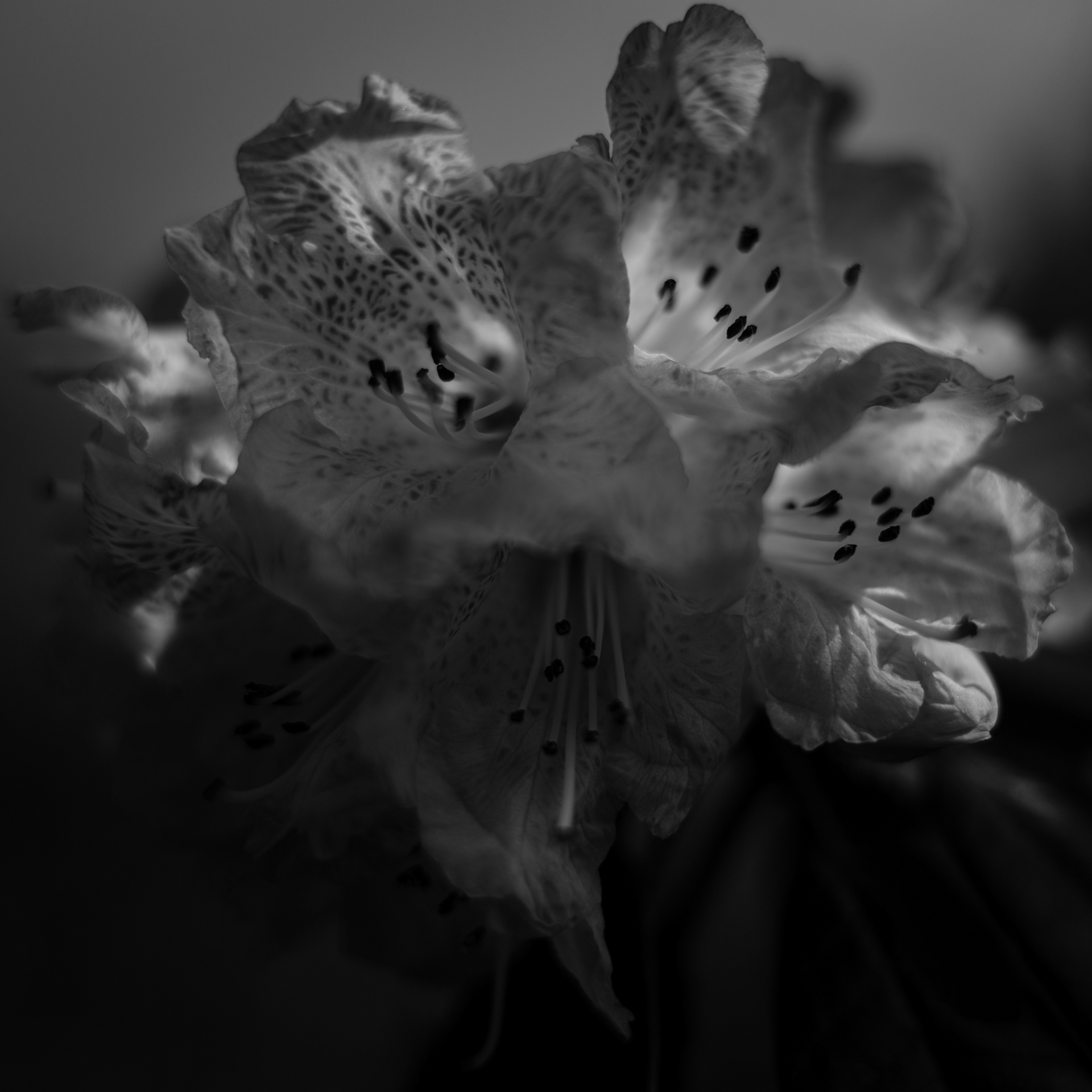
Resilience: the 'national flower' of Nepal, rhododendrons originated 55 million years ago - before the Himalayas.
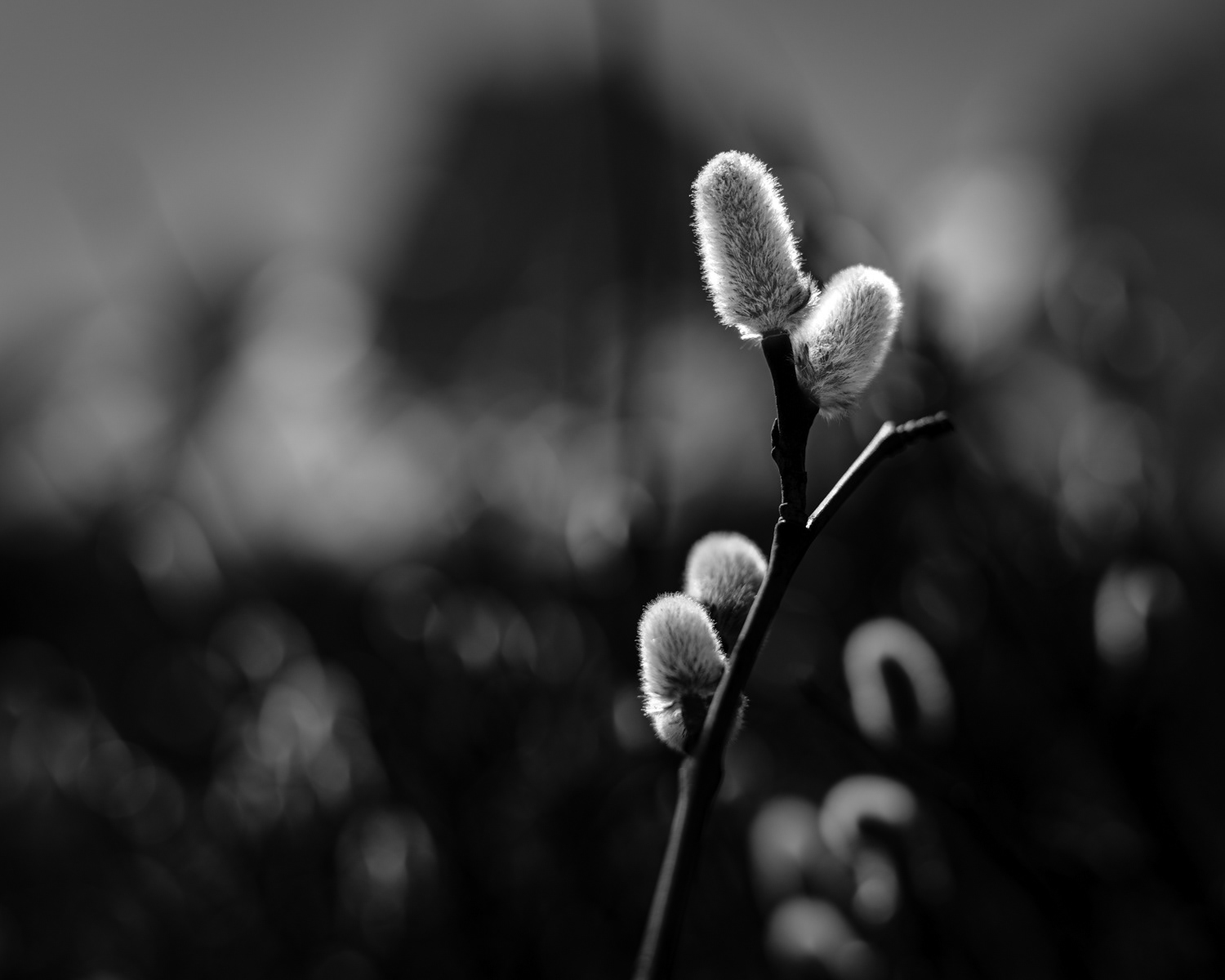
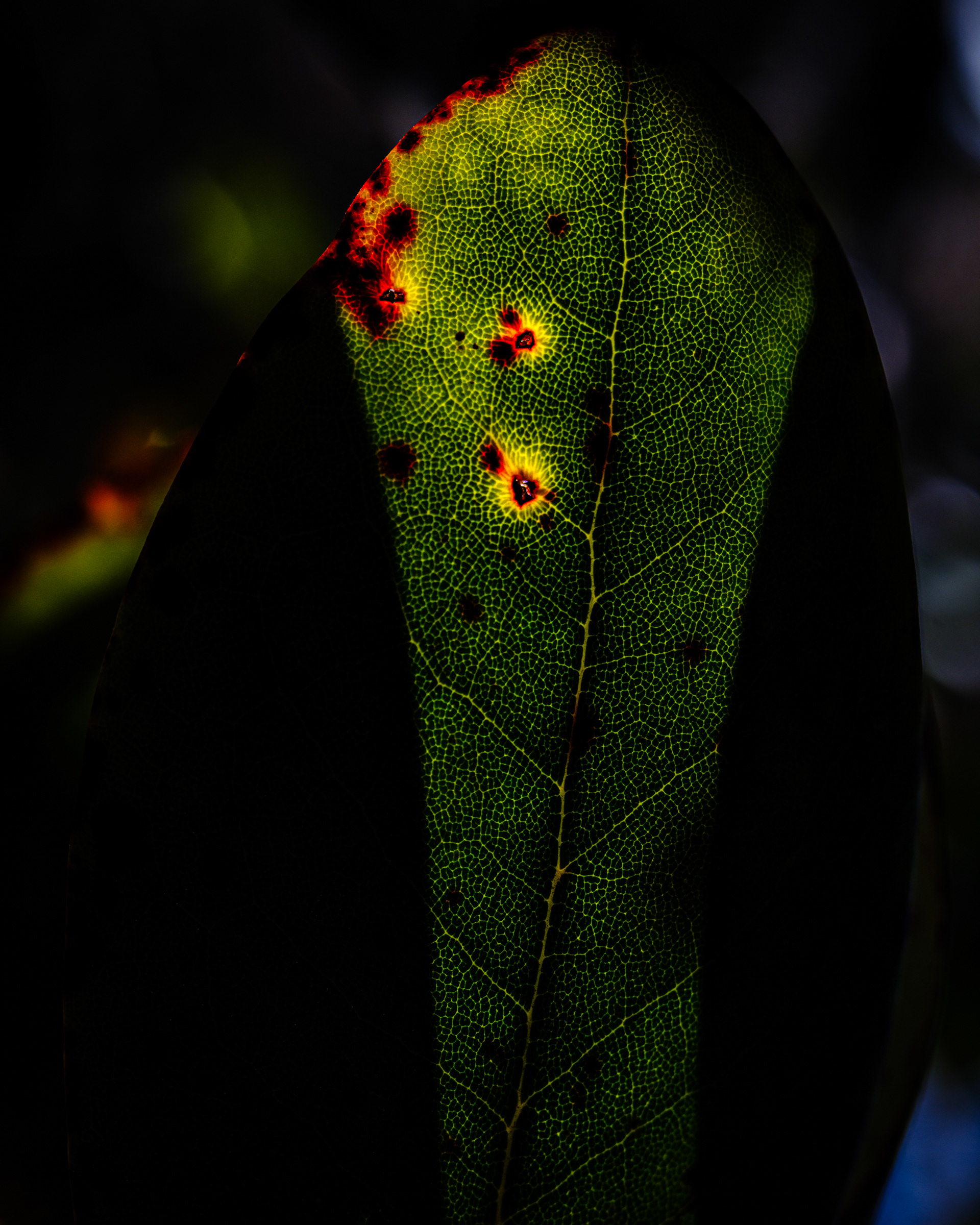
Light creates miracles: plants convert the energy from sunlight into chemical energy. A by-product is oxygen.